Industrial Polymer 3D Printing Services
Leverage Industrial 3D Printing to accelerate your product lifecycle, from high-fidelity functional prototypes to certified serial production. At Prototal, we specialize in high-performance polymer additive manufacturing, providing the scale and repeatability required to bridge the gap between initial design and mass market. Our technology-agnostic approach ensures your parts are optimized for performance, durability, and cost-efficiency.
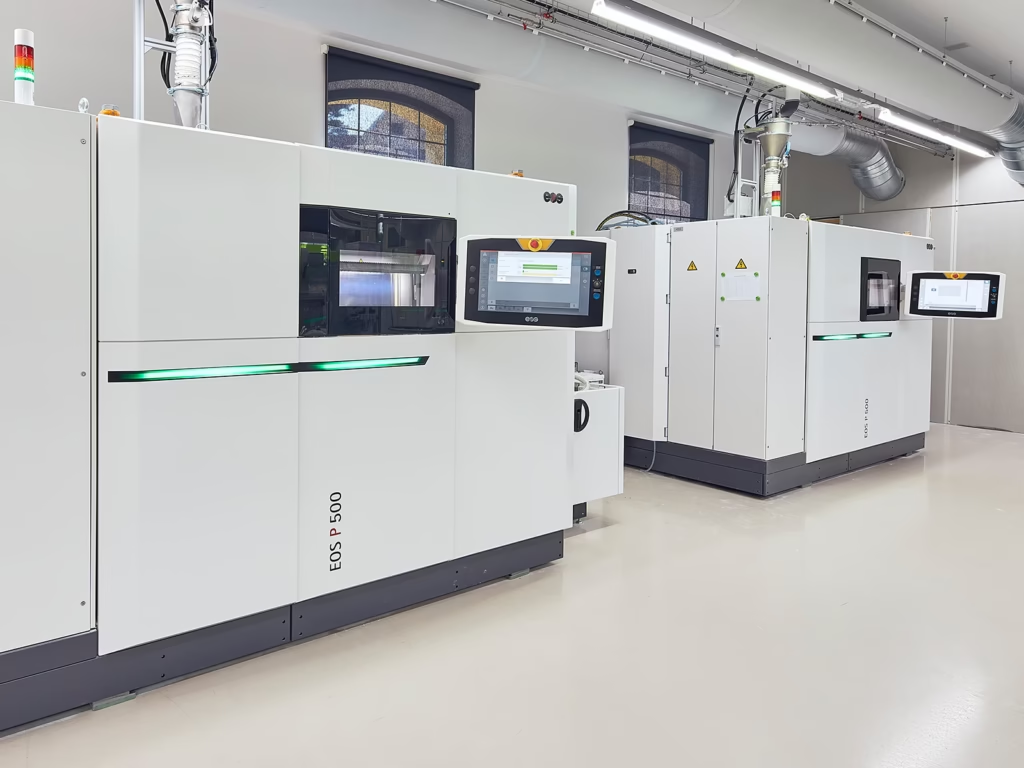
With a leading European fleet of over 130+ industrial 3D printers, Prototal is your partner for scaling production from a single unit to 100,000+ parts. As a certified serial production partner for HP and EOS, we deliver end-use components with industrial-grade materials, tight tolerances, and the repeatable quality demanded by the medical, aerospace, and automotive sectors.


The Strategic Technology Matrix
Manufacturing success depends on matching the process to the objective. We categorize our polymer infrastructure into two distinct paths: Serial Production, Specialized High-Fidelity Prototyping, and Niche Production.
Industrial Serial Production: Powder Bed Fusion
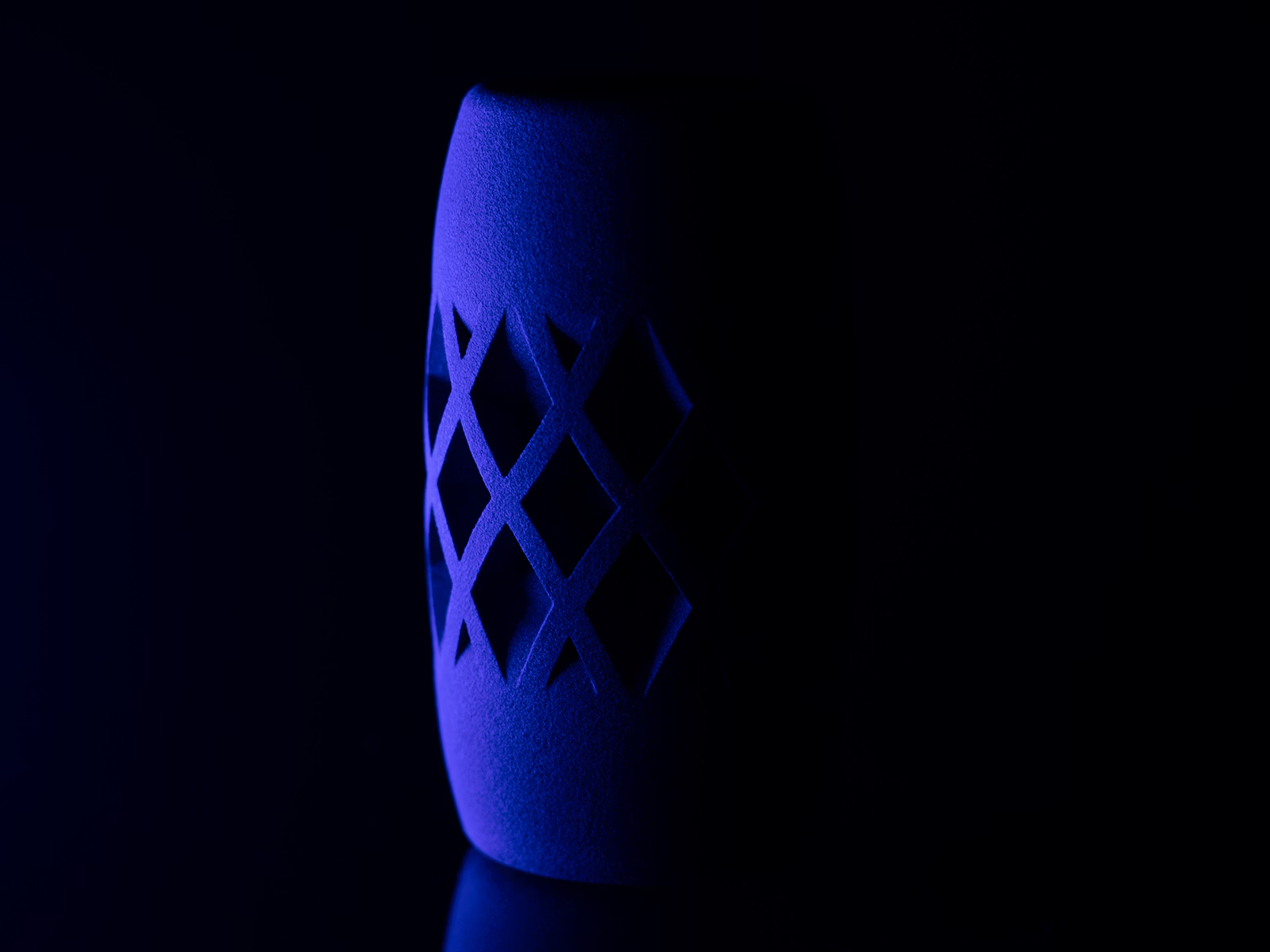
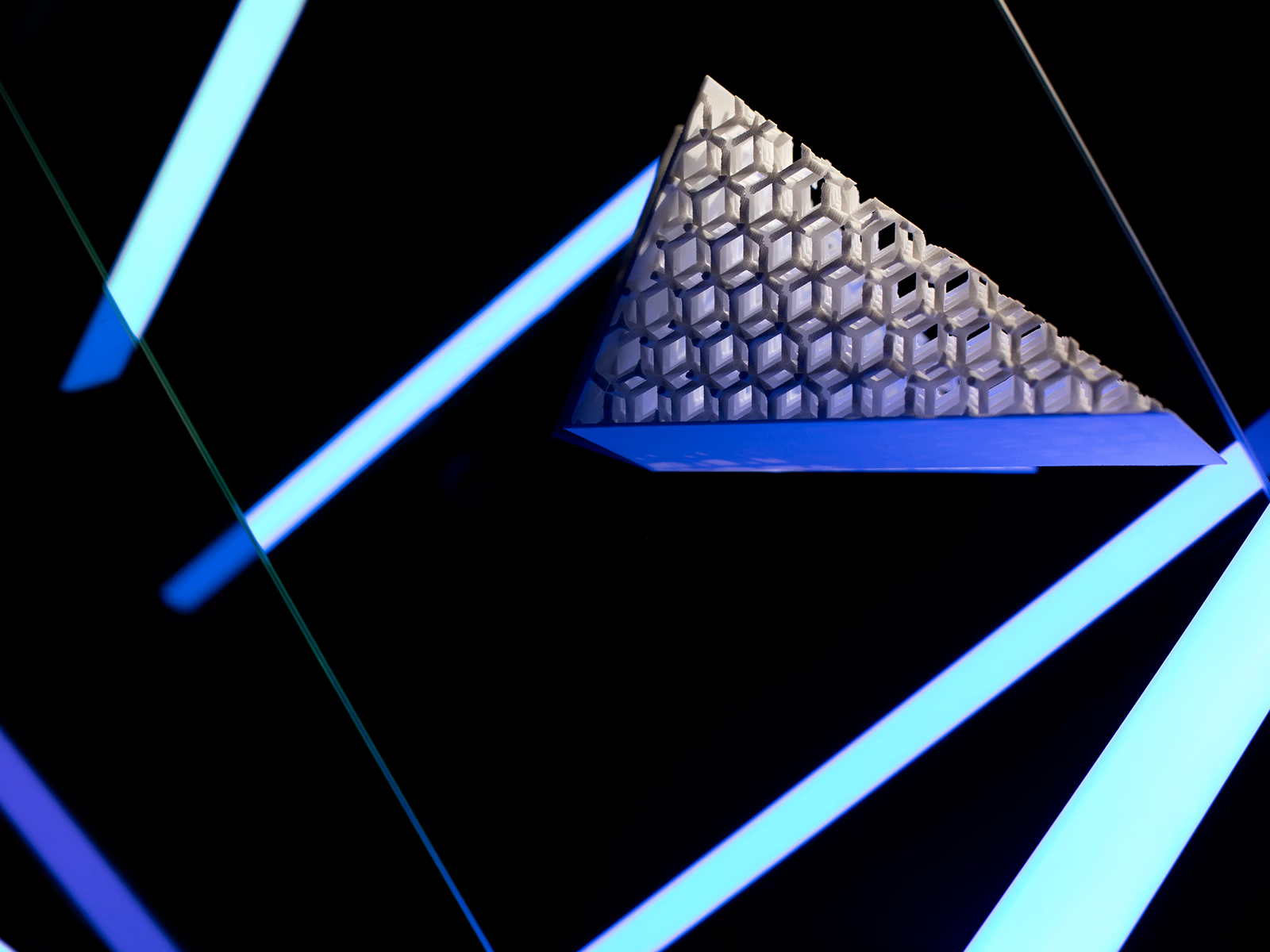
Powder Bed Fusion (including SLS and MJF) is the definitive path for industrial scaling. By utilizing a bed of polymer powder fused by a laser or thermal energy, PBF enables “Complexity for Free” without the need for support structures. This allows for high-density nesting of parts, making it the most viable technology for serial runs up to 100,000 units. It can deliver mechanical properties and durability comparable to injection molding.
Niche Serial Production
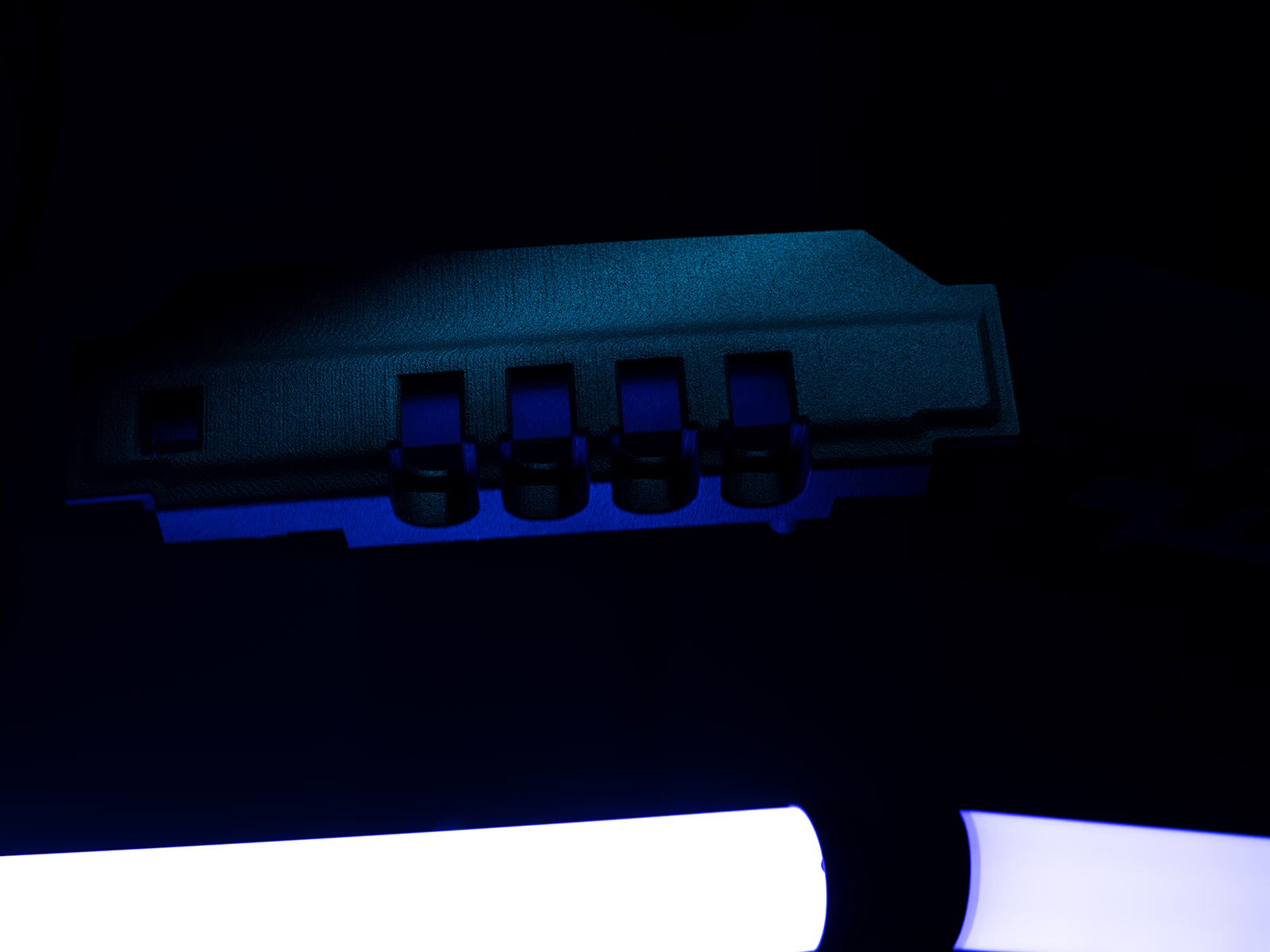
FDM serves as a specialized industrial workhorse for both rugged tooling and niche serial production. Utilizing high-performance engineering materials, it is the definitive choice for small-batch series with extreme requirements for chemical resistance, flame retardancy, or mechanical strength. This suite ensures every design is technically proven before transitioning to large-scale production.
Specialized High-Fidelity Prototyping
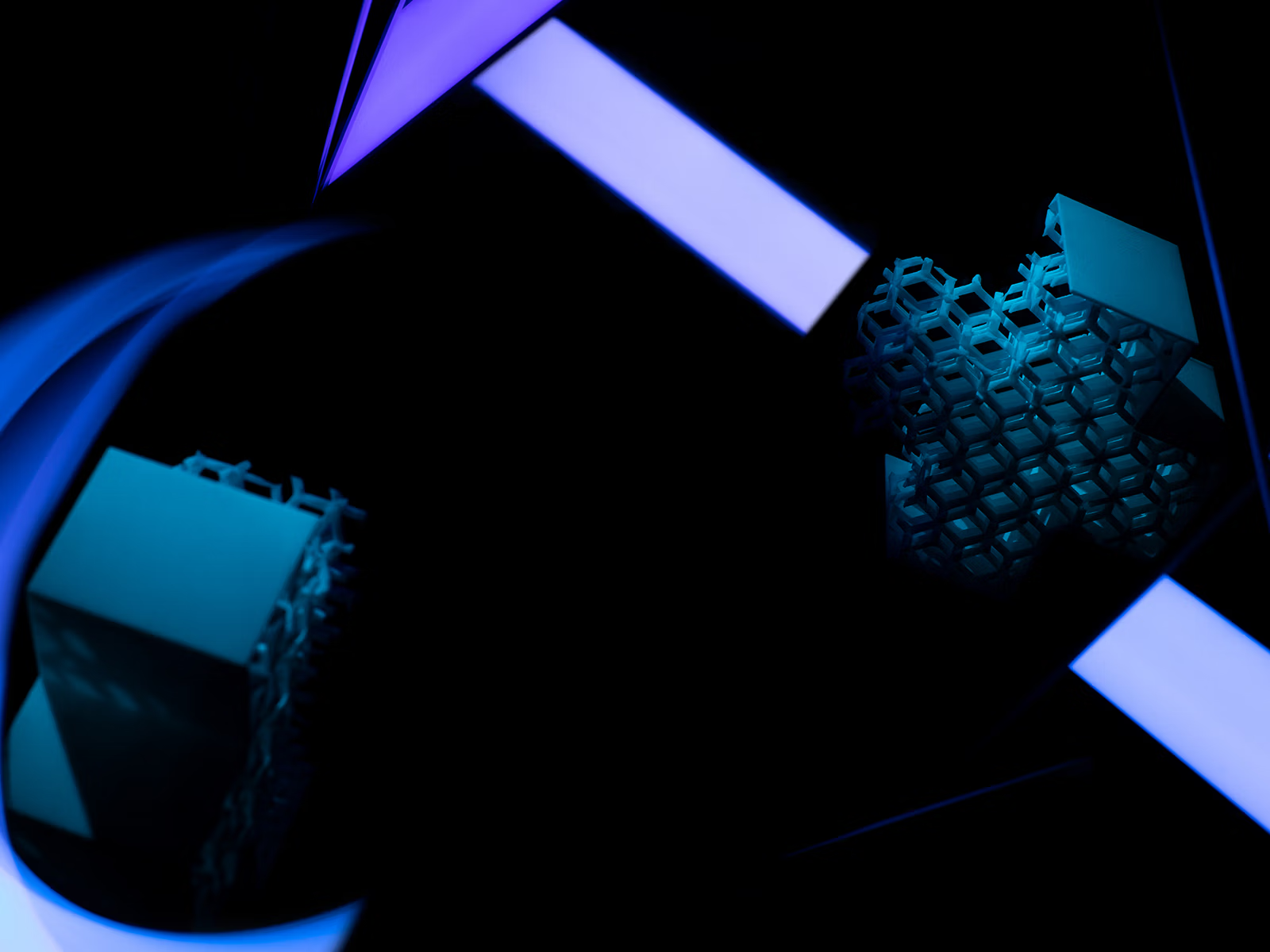
While PBF drives industrial volume, our prototyping infrastructure provides critical validation before full-scale deployment. We utilize SLA and DLP resin systems to achieve ultra-high resolution and smooth surfaces for intricate geometries or master patterns. For multi-material requirements, PolyJet technology allows for complex, multi-functional builds.
Expert Guidance Over Guesswork
In an era of rapidly evolving manufacturing technologies, you shouldn’t have to be an expert in every industrial 3D printing modality to succeed. As your industrial partner, we remove the burden of technology selection. Instead of navigating a complex landscape of polymers and processes alone, you simply provide your business and product objectives.
Whether that is the lowest unit cost, manufacturing scalability, extreme thermal resistance, or rapid speed to market, our engineers facilitate decades of cross-industry experience to map your project to the definitive production path.
Powder Bed Fusion Technologies

Prototyping and Niche Production Technologies


Certified for Serial Production.
Partnered for Your Success.
Prototal is one of Europe’s leading industrial 3D printing partners, offering a unique combination of local expertise and massive industrial scale. With a fleet of over 130+ industrial 3D printers strategically located across Italy, Denmark, Norway, Sweden, the UK, and Austria, we provide the capacity to handle everything from rapid prototypes to high-volume global rollouts.
We go beyond traditional vendor relationships by focusing on long-term partnerships that optimize your entire production lifecycle. As a certified partner for serial production with both HP and EOS, our processes meet the highest rigorous standards for consistency, quality, and repeatability. When you choose Prototal, you gain a locally rooted partner with the industrial horsepower to deliver certified, production-grade components at any scale.
Popular Polymer Materials

MJF PA 11
Offering superior impact resistance and ductility compared to Nylon 12, PA 11 is derived from renewable sources, making it a more sustainable, high-performance option.
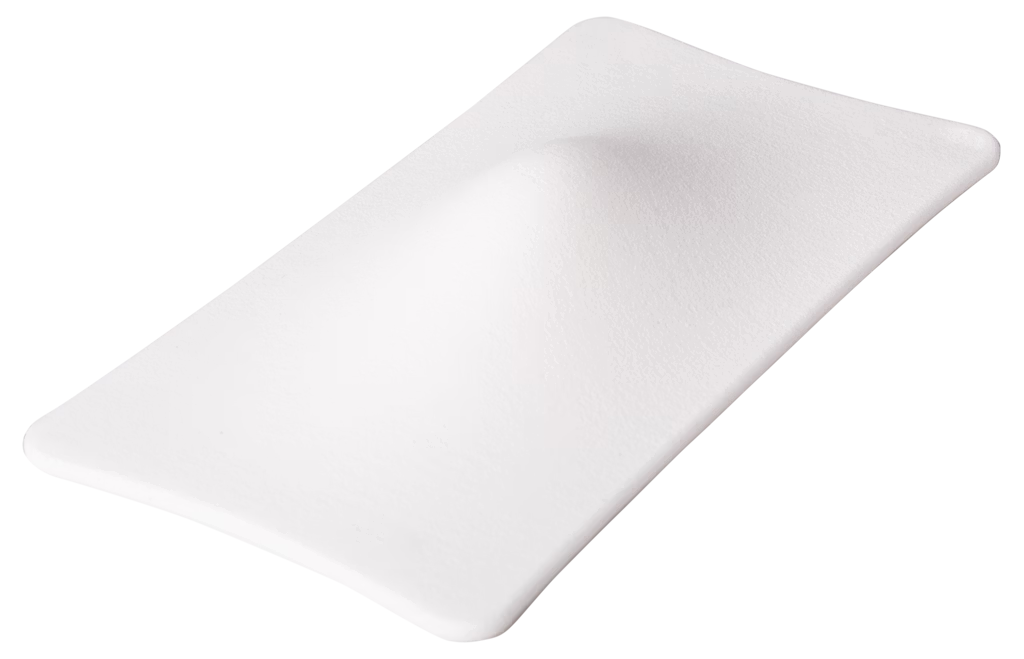
SLS PA 2200
A versatile, strong, and durable classic for Selective Laser Sintering (SLS). It offers excellent mechanical properties, making it ideal for functional prototypes and end-use parts.
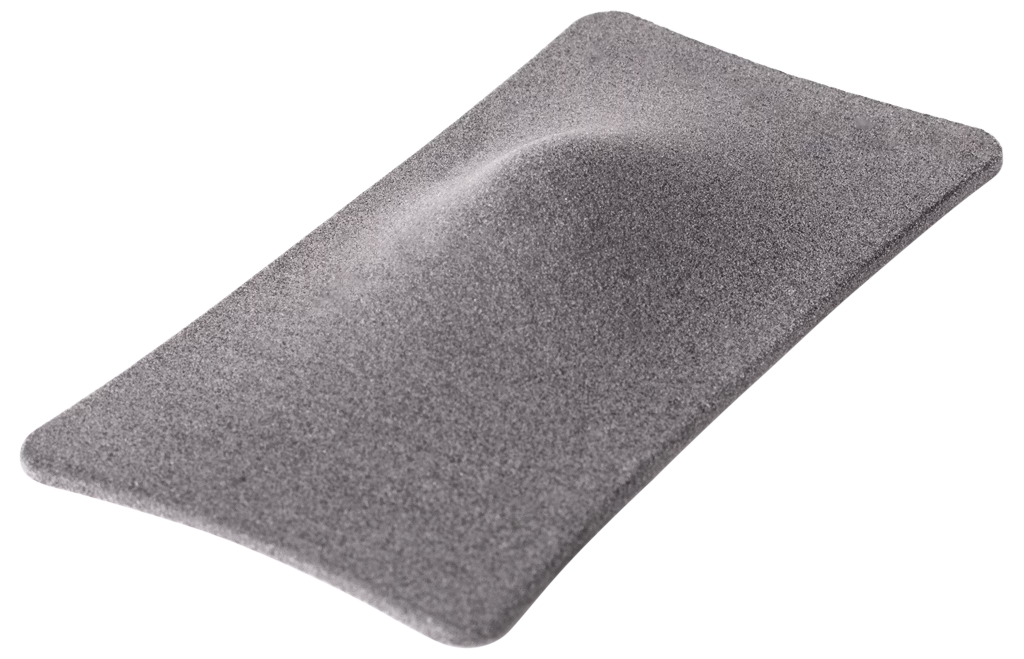
MJF PA 12
Known for its exceptional strength and fine resolution, this Nylon 12 powder provides a smooth finish and excellent chemical resistance, perfect for complex, detailed parts.
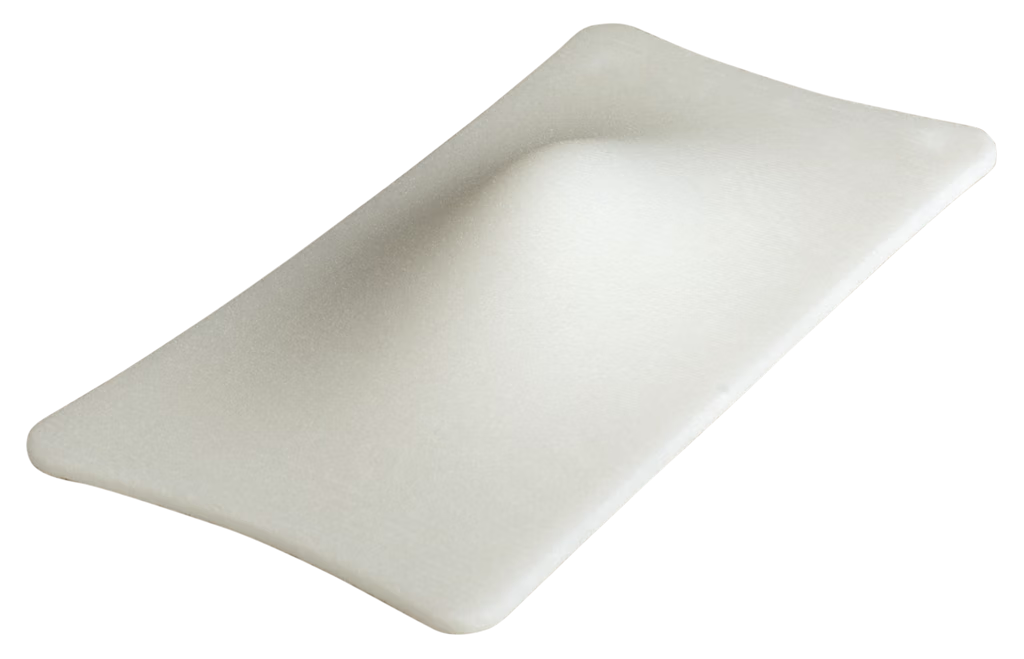
SLS PA 3200 GF
Known for its exceptional strength and fine resolution, this Nylon 12 powder provides a smooth finish and excellent chemical resistance, perfect for complex, detailed parts.

SLS PA 2210 FR
A high-performance, halogen-free flame retardant polyamide engineered for sensitive environments where smoke toxicity and environmental impact are critical concerns.

SAF PP
Polypropylene offers exceptional chemical resistance and fatigue endurance, providing a lightweight, moisture-proof polymer solution for demanding industrial applications.
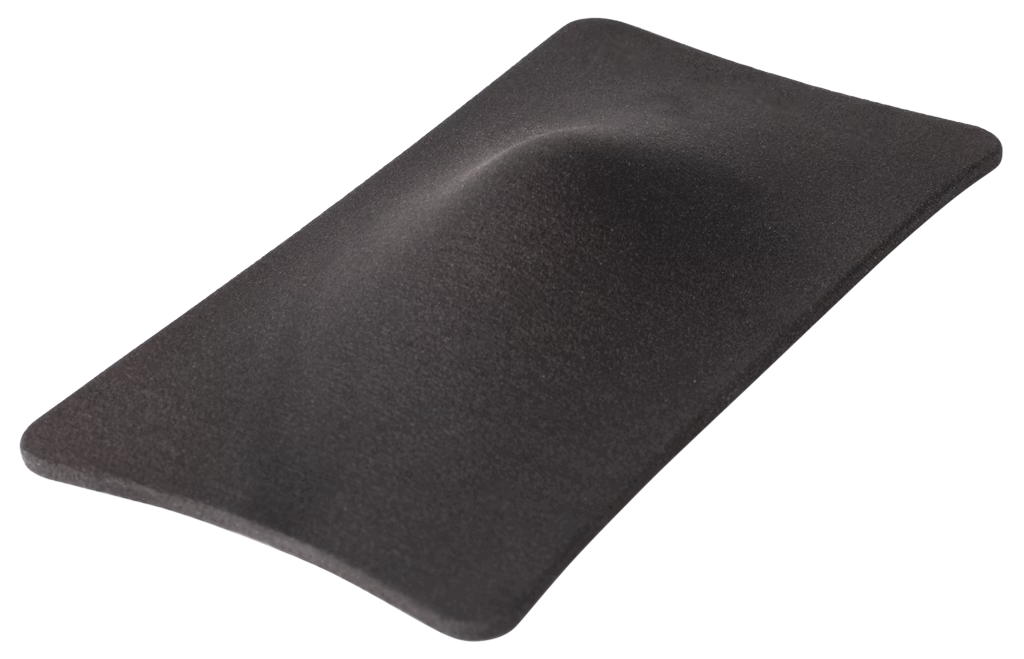
SLS PA 603-CF
The ultimate material for high-performance engineering, PA 603-CF is a carbon-fiber-reinforced nylon offering extreme stiffness and an industry-leading strength-to-weight ratio.
SLS PA 640-GSL
Engineered for lightweight structural integrity, PA 640-GSL is a hollow glass-sphere reinforced nylon that offers exceptional dimensional stability and low density.

SLS TPU 88A
An elastomeric material, TPU is highly valued for its flexibility and shock absorption making it the go-to choice for seals, grips, and flexible connectors. Available in black and neutral.
Selected Post-Processing Services
Manufacturing excellence is not achieved at the moment a print completes; it is defined in the finishing phase. We treat post-processing as a rigorous engineering stage where raw additive components are transformed into high-performance, end-use products.
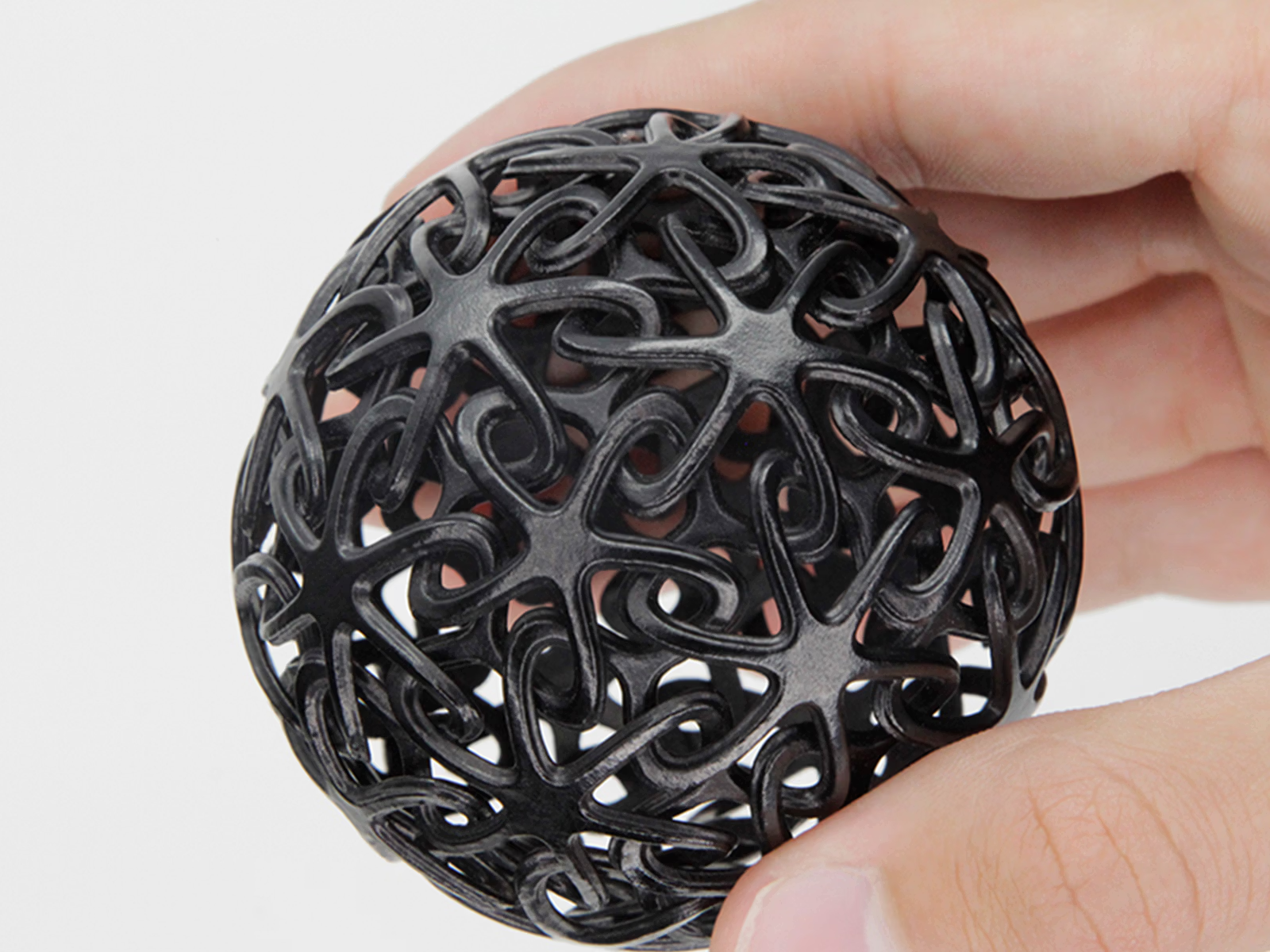
Vapor Smoothing
This automated process uses solvent vapor to seal and smooth surfaces, significantly improving aesthetics, hygiene, and airtightness while achieving an injection-molded finish.
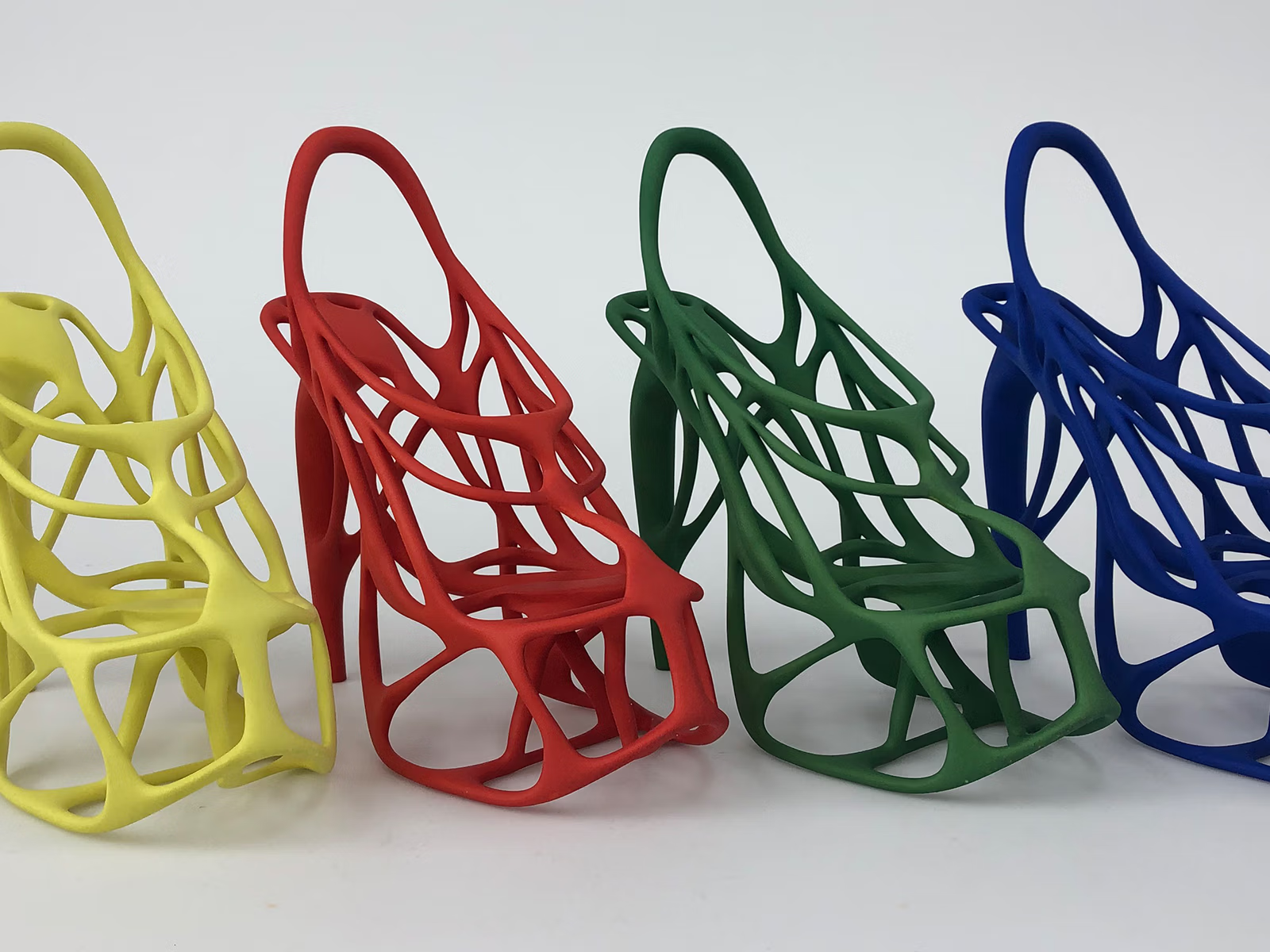
Coloring
Our deep-penetration dyeing process provides uniform, permanent color across the entire part surface, allowing for consistent branding and functional color-coding of polymer components.

Vibratory Finishing
Parts are processed in a vibrating media to deburr edges and smooth surfaces, ensuring a consistent, high-quality tactile finish across complex geometries and large batches.
Datasheets at a Glance
| Poweder Bed Fusion | Density (g/cm³) | Tensile strength (MPa) | Tensile modulus (MPa) | Elongation at break | Charpy IS (kJ/m² @ 23°C) | HDT (°C @ ~1.8 MPa) |
|---|---|---|---|---|---|---|
| MJF PA 11 | 1.05 | XY 52 | XY 1800 | XY 50% | XY 5 (notched) | 54 |
| MJF PA 12 | 1.01 | XY 48 | XY 1700 | XY 20% | XY 3.5 (notched) | 95 |
| MJF PA 12 GB | 1.3 | XY 30 | XY 2500 | XY 10% | XY 3 (notched) | 114 |
| MJF PA 12 W | 1.02 | XY 49 | XY 1900 | XY 17% | XY 4.5 (notched) | 94 |
| SLS PA 11 | 1.02 | XY 52 / Z 54 | XY 1750 / Z 1800 | XY 28% / Z 24% | XY 184 / Z 85 (unnotched) | 76 |
| SLS PA 2200 | 0.93 | XY 48 / Z 42 | XYZ 1650 | XY 18% | X 53 (unnotched) | 64 |
| SLS PA 3200 GF | 1.22 | XY 51 / Z 47 | XY 3200 / Z 2500 | XY 9% | X 35 (unnotched) | 176 |
| SLS PA 2210 FR | 1.06 | XY 46 / Z 41 | XY 2500 / Z 2300 | XY 4% | – | 108 |
| SLS PA 2241 FR | 1.00 | XY 49 / Z 46 | XYZ 1900 | XY 15% | – | 84 |
| SLS PA 603-CF | 1.10 | XY 85 | XY 7900 | XY 4% | – | 173 |
| SLS PA 620-MF | 1.20 | XY 51 / Z 34 | XY 5725 / Z 3000 | XY 5% / Z 3% | – | 179 |
| SLS PA 640-GSL | 0.82 | XY 49 / Z 33 | XY 3816 / Z 1945 | XYZ 3% | – | 170 |
| SLS PA 12 Alu | 1.36 | XY 48 | XY 3800 | X 4% | – | 144 |
| SLS TPU 88A | 1.1 | X 8 / Z 7 | XY 75 | X 280% / Y 130% | – | – |
| FDR PA 1101 | 1.03 | XY 50 / Z 48 | XYZ 1650 | XY 30% | XY N / Z 85 (unnotched) | 47 |
| SAF Polypropylene | 0.89 | XY 26 | XY 1260 / Z 1212 | XY 22% / Z 11% | XY 3.5 / Z 2.5 (notched) | 56 |
| FS3200PA-F | 0.52 | XY 42 | XY 1350 | XY 25-40% | – | 145 |
The data shown is indicative and intended for reference only. Material properties may vary depending on printing conditions and technology. Although care has been taken to ensure accuracy, typographical or data entry errors may occur. Please be aware that certain values in this table can be derived from different testing standards made from our suppliers, for authoritative specifications, please refer to the original manufacturer datasheets provided under each material.
Our vision is to redefine European manufacturing as the most trusted, flexible & sustainable partner in serial production
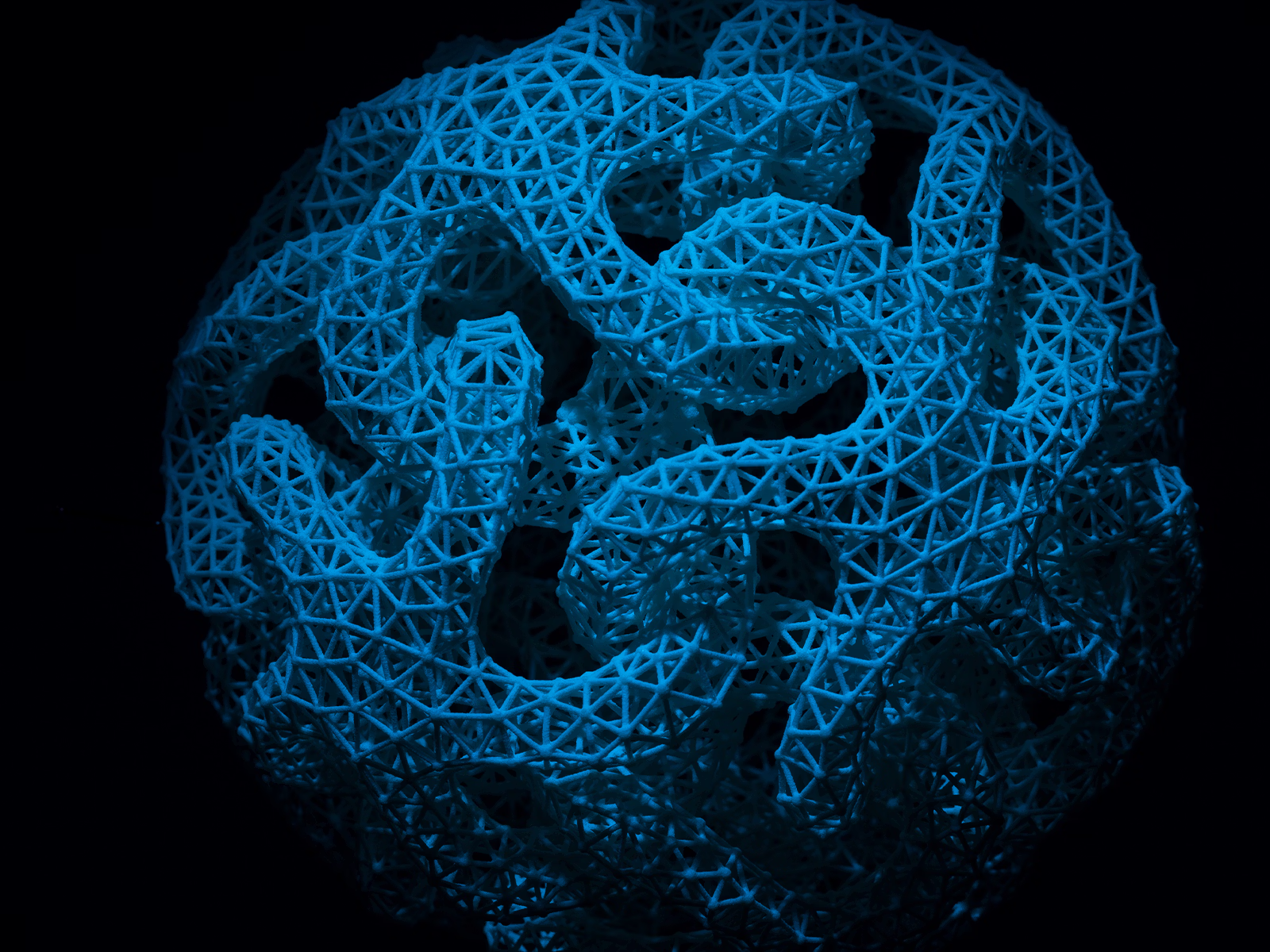
3D Printing Guidelines
Our helpful guides are specifically designed to assist you before submitting your design to us. We always strive to achieve the best possible outcome, and by following our guidelines, you can be confident that your design will be of the highest quality.
Get in touch with us if you need guidance, we are happy to help you!
Enabling the Next Industrial Revolution Together




Quote Your Next Project
Looking for high-quality industrial 3D printing solutions tailored to your needs? Our team is ready to provide a detailed quote for your project. Simply share your specifications, and we’ll deliver a clear, competitive estimate — no surprises, just precision and reliability.
Why choose us?
- 3D printing solutions for any scale and complexity
- Fast and accurate quoting process
- Local presence close to your business and business needs

Bring Your Design to Life
"*" indicates required fields
By submitting this form, you agree to our Privacy Policy. We use the information you provide to respond to your inquiry and provide requested manufacturing services.

FAQs
Whether you are navigating the transition from prototyping to serial production or optimizing an existing supply chain, we are here to provide the technical clarity you need. If your specific challenge isn’t covered here, our application engineers are ready to discuss your project’s unique requirements and help you find the most efficient path to production.
Industrial 3D printing, also known as additive manufacturing, offers a wide range of advantages that have made it increasingly popular across various industries. Here are some key advantages of 3D printing:
- Design Flexibility: 3D printing allows for intricate and complex designs that are difficult or impossible to achieve with traditional manufacturing methods. It offers design freedom, enabling the creation of geometries and structures that were previously impractical or cost-prohibitive.
- Rapid Prototyping: 3D printing enables rapid prototyping, significantly reducing the time and cost involved in developing prototypes. It allows for quick iterations and design improvements, accelerating the product development cycle.
- Cost Efficiency: Traditional manufacturing often involves high setup costs and tooling expenses. With 3D printing, these costs can be minimized or eliminated since it requires little to no tooling. It is particularly advantageous for low-volume production or customized/personalized manufacturing.
- Reduced Waste: 3D printing is an additive process that minimizes material wastage. It only uses the exact amount of material required for building the object, leading to more sustainable and environmentally friendly manufacturing.
- Complex Geometry and Customization: 3D printing enables the creation of complex geometries, intricate internal structures, and customizable designs. This is particularly beneficial for industries such as aerospace, healthcare, and architecture, where highly specialized and personalized products are required.
- Supply Chain Optimization: Additive manufacturing can decentralize production, allowing for on-demand manufacturing closer to the point of need. This can lead to reduced lead times, lower transportation costs, and optimized supply chains.
These advantages make Industrial 3D printing a valuable tool in various industries, including aerospace, automotive, healthcare, consumer goods, and more. By leveraging the benefits of 3D printing, businesses can gain a competitive edge, drive innovation, and unlock new possibilities in product development and manufacturing processes.
We offer a range of post-processing services to ensure your 3D printed parts meet the highest standards of quality, precision, and aesthetics.
- Support Removal & Sanding
- Vapor Smoothing
- Vibratory Finishing
- Bead Blasting
- Coloring
- Primer, Painting, coating & lacquering
- Threaded/non-threaded inserts
- Assembly
At Prototal, we offer a lot of different 3D printing technologies:
- Multi Jet Fusion – MJF
- Selective Laser Sintering – SLS
- Stereolithography – SLA
- Selective Absorption Fusion – SAF
- Fine Detail Resolution – FDR
- PolyJet a material jetting technology
- Fused Deposition Modeling – FDM
- Digital Light Processing – DLP
We have a wide range of materials within different technologies. We are always introducing new materials, but right now this is what we offer:
MJF
- PA 11
- PA 12
- PA 12 W
- PA 12 S
- PA 12 GB
SLS
- FS3200PA-F
- PA 11
- PA 2200
- PA 3200 GF
- PA 2210 FR
- PA 2241 FR
- PA 603-CF
- PA 620-MF
- PA 640-GSL
- “Rubber” 50A-80A
- PA 12 Aluminium filled
- PEEK*
- PA 6*
- BlueDP 3S*
FDR
- PA 1101
SAF
- Polypropylene (PP)
SLA
- Accura ClearVue
- Accura Extreme
- Accura 25
- Accura HPC
- Somos® WaterClear Ultra
DLP
- PRO-BLK 10
- FLEX-BLK 20
- Hi-Temp 300 AMB
- Rubber 65A Shore
PolyJet
- All Digital Materials from Stratasys
FDM
- Ultem 9085
- Ultem 1010
- Polycarbonate (PC)
- PC/ABS
- PC-ISO
- ABS (ESD7, M30 & M30i)
- ASA
- SR-30
- PEEK & Carbon PEEK
- PA 12 CF
- Carbon PA
- Polypropylene (PP)
- And other engineering materials
*Subcontracted material
The maximal size of part printable is dependable on the 3D printing technology and the geometry of your part:
- SLS – 700x380x580 mm
- MJF – 380x284x380 mm
- FDR – 200x250x125 mm
- SAF – 315x208x293 mm
- SLA – 1500x750x550 mm
- FDM – 900x600x900 mm
- DLP – 150x70x350 mm
- PolyJet – 490x390x200 mm
Manufacturing should not be transactional. At Prototal we value a partnership, which is why you will get a dedicated contact person close to your operations that knows your business and business needs. To start our future partnership, please reach out to the local team within your area that can be found under Contact us or send us an e-mail:
- Norway: post@prototal.no or +47 74 09 06 00
- Sweden: am@prototal.se or +46 36 38 72 00
- Denmark: 3dp@prototal.dk or +45 43 99 37 36
- United Kingdom: info@prototaluk.com or +44 1635 635855
- Italy: info@prosilas.com or +39 733 892665
- Austria, Germany & Switzerland: 3dp@prototalgroup.at or +43 5572 52946-9
As a flexible partner we can offer lead times down to 1 working day depending on the selection of technology, material, post-processing and quality control. Usually, you can expect a lead time within the range of 2-3 working days, depending on same variables as stated above.*
*While Prototal offers industry-leading turnaround times, all lead times are provided as estimates. Lead times are based on standard operating conditions and the selection of the most efficient regional technology hub for your project. Final lead times are determined by the specific requirements of your order, including local availability, part geometry, material selection, and post-processing. For complex geometries that require extensive support structures or high-performance materials, we may allocate additional processing time. This ensures the structural integrity and dimensional accuracy of your components before they leave our facility. By leveraging our decentralized hub network and cross-border logistics, we work to minimize delays; however, the technical requirements of the manufacturing process remain the primary factor in our quality-assured lead times.
Commercial printers often use the technology Filament Extrusion (also known as FDM), where a nozzle “draws” layers with melted plastic string. At Prototal, we primarily use Powder Bed Fusion or PBF (SLS, MJF, SAF and FDR). Instead of a nozzle, these systems use high-powered lasers or fusing agents to bond microscopic layers of polymer powder together.
Design Freedom and Support: In filament printing, any “overhanging” part of your design requires supports that must be broken off, leaving scars on the surface. In our powder systems, the part is suspended in a bed of loose powder during the build. This means you can design complex internal channels, interlocking gears, and organic shapes that are impossible to produce on a standard printer.
Precision and Industrial Tolerances Accuracy is where the distinction between professional and standard systems is most visible. Because we utilize industrial-grade systems, we achieve significantly tighter tolerances and higher repeatability.
- Powder Bed Fusion: We typically achieve tolerances of ±0.3 mm (with a lower limit of ±0.2 mm). Because the parts are supported by the surrounding powder, they remain dimensionally stable and free from the “scars” left by support structures.
- Filament Extrusion: Standard filament printers often have loose tolerances of ±0.5 mm or more.
Surface Quality While filament printers often leave visible “layer lines,” Powder Bed Fusion produce a consistent, matte finish that looks and feels like a manufactured product. Because we use industrial-grade thermal control, we can achieve much tighter tolerances for PBF at ±0.5 mm and repeatability, which is critical when you need 100 parts that are all exactly identical.
Post-Processing While both technologies support basic manual finishing, Powder Bed Fusion (PBF) offers a significantly broader range of industrial surface treatments. Because PBF parts are porous and heat-stable, we can provide Vapor Smoothing for an injection-molded look, Bead Blasting for a uniform matte texture, and deep Coloring (Dyeing) that penetrates the material surface. In contrast, FDM post-processing is more focused on functional requirements. Due to the visible layer lines and material properties, finishing is typically limited to support removal and basic sanding.
Batch Production Efficiency Standard printers are limited to the surface area of the build plate. With Powder Bed Fusion, we can “nest” parts in 3D—stacking them on top of each other throughout the entire volume of the machine. This allows Prototal to scale from a single prototype to a series of thousands of parts with extreme efficiency.


