UAV & Drones 3D Printing: Aerospace-Grade Additive for the NextGen of UAVs
In the high-stakes domain of Unmanned Aerial Vehicles (UAVs), performance is measured by endurance, payload capacity, and structural integrity. Prototal delivers advanced additive manufacturing techniques that allow drone pioneers to bypass the limitations of conventional manufacturing methods in airframe construction.
By leveraging advanced materials such as high-performance polymers and lightweight metal alloys, we enable the creation of complex geometries and topology-optimized aerostructures that reduce weight without compromising flight safety. From rapid prototyping capabilities for flight-ready frames to the serial production of 10,000+ specialized uav components, we are the engine behind your aerial innovation..
Certified Production with ISO 9001:2016 & AS/EN 9100


We are a strategic extension of your supply chain.
My goal is to help the defense industry bridge the gap between legacy requirements and future possibilities. By embracing certified, smart manufacturing workflows, we help our partners iterate faster, scale seamlessly, and ensure that their technology remains at the cutting edge. We are building the infrastructure for the next generation of defense.
— Karin Holst, Global Sales Director for Aerospace & Defense at Prototal Group

Why Choose Additive Manufacturing for Drones & UAS
Strategic integration of additive technology allows drone manufacturing teams to achieve “Impossible Geometries” that enhance flight time and payload capacity while shortening the development cycle for mission-specific hardware.
High-Performance Materials
Flight endurance is driven by the strength-to-weight ratio and overall mechanical performance of every part on the airframe. We utilize specialized advanced materials such as PA 603-CF for rigid, ultra-lightweight airframe components and PA 640-GSL for parts requiring glass-sphere reinforcement for dimensional stability and reduced weight. For high-consistency UAV production at serial volumes, HP PA 12 provides the isotropic properties needed for robust, end-use drone housings with excellent surface quality ready for end-use applications.
Part Consolidation & Structural Integrity
Drone assemblies built using conventional manufacturing methods are traditionally plagued by high part counts, leading to numerous failure points and vibration issues. Additive manufacturing techniques allow us to consolidate multi-part assemblies and snap-fits – such as motor mounts integrated directly into the arm – into a single, seamless component. This reduces assembly time, eliminates fastener weight, and results in a stiffer, more reliable airframe with improved cost efficiency across the bill of materials.
Optimized Aerodynamics
Traditional manufacturing methods struggle with complex geometries and internal cavities. With 3D printing, we can design and produce internal cooling ducts and conformal air channels that follow the exact contours of the drone’s electronics or battery compartments. This ensures optimal thermal management during high-performance flight maneuvers.
Rapid Mission-Specific Customization
Modern UAS requirements change faster than tooling can be produced. Whether you need a specialized sensor mount for a specific payload or a modified wing profile for high-altitude flight, additive technology enables tool-less rapid production of mission-specific hardware. This approach enables faster production cycles and the delivery of bespoke mission-kits without the high CapEx of traditional molds – though when volumes justify it, we can also transition designs into injection molding for cost-efficient scale.
On-Demand Digital Supply Chain
By maintaining a digital library of your airframe components, we can print spare drone components on-demand. This eliminates the need for large physical inventories and ensures that legacy fleets remain operational with minimal downtime, supported by our ability to scale to thousands of uav components a day when demand spikes.
Think it. Print it. Fly it!
Prototal operates as a strategic extension of your supply chain, providing the manufacturing continuity required for rapid-response projects and long-term fleet sustainment. Our rapid prototyping capabilities are paired with deep expertise in high-performance materials and a thorough understanding of the strict regulatory and confidentiality standards required by global defense agencies and the broader aerospace industry.
As a certified partner of leading OEMs like HP and EOS, combined with our AS/EN 9100 certification, we provide the validated repeatability necessary for mission-critical aerospace components. Our industrial infrastructure is built for scale; with our extensive machine park, we possess the capacity to print up to 2,000 drones. This massive throughput shortens production cycles dramatically and allows us to move from design validation to high-volume uav production at a speed that conventional manufacturing methods cannot match, ensuring you stay ahead of mission requirements.
Integrating Artificial Intelligence and Industrial 3D Printing
CODRONE, a Danish startup developing autonomous drones for pilotless inspection and surveillance, partnered with Prototal to bring its first commercial product, Aluco, from prototype to drone manufacturing at scale. By using industrial 3D printing and high-performance polymer materials, CODRONE achieved a lightweight, durable drone design with complex geometries integrated into fewer drone components, reduced part count, and significantly faster time to market.

With industrial 3D printing, we can go directly from prototype to final drone production
Beyond the functional advantages, we also save development time throughout the entire process. With industrial 3D printing, we can go directly from prototype to final drone production, as the quality and finish of the components from Prototal are extremely high.
— Kristian Husum Laursen, CEO & Co-founder CODRONE


WINDRACERS
Prototal collaborated with Windracers, a UK-based aerospace company, to support the development and uav production of lightweight polymer aerospace components for Windracers ULTRA, a long-range, heavy-lift cargo drone. By replacing metal parts with industrially 3D printed PA 2200, Prototal helped reduce weight, shorten production cycles, and enable ongoing design optimization for mission-critical aerospace applications – an approach that enables faster production while improving overall cost efficiency.
Selected 3D Printing Materials for UAV & Drones
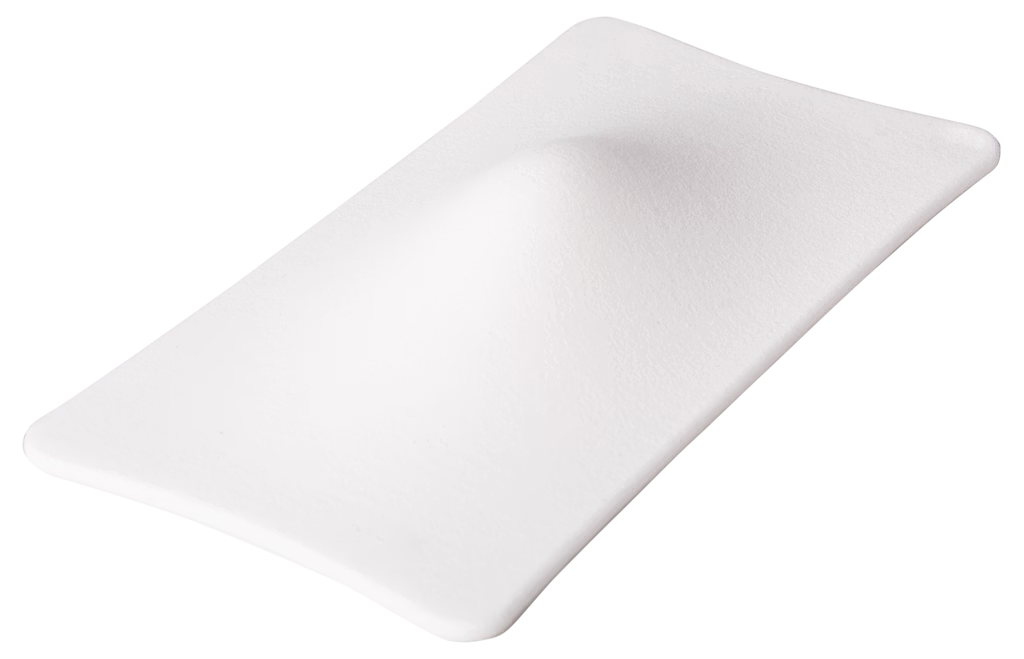
SLS PA 2200
A versatile, strong, and durable classic for Selective Laser Sintering (SLS). It offers excellent mechanical properties, making it ideal for functional prototypes and end-use parts.
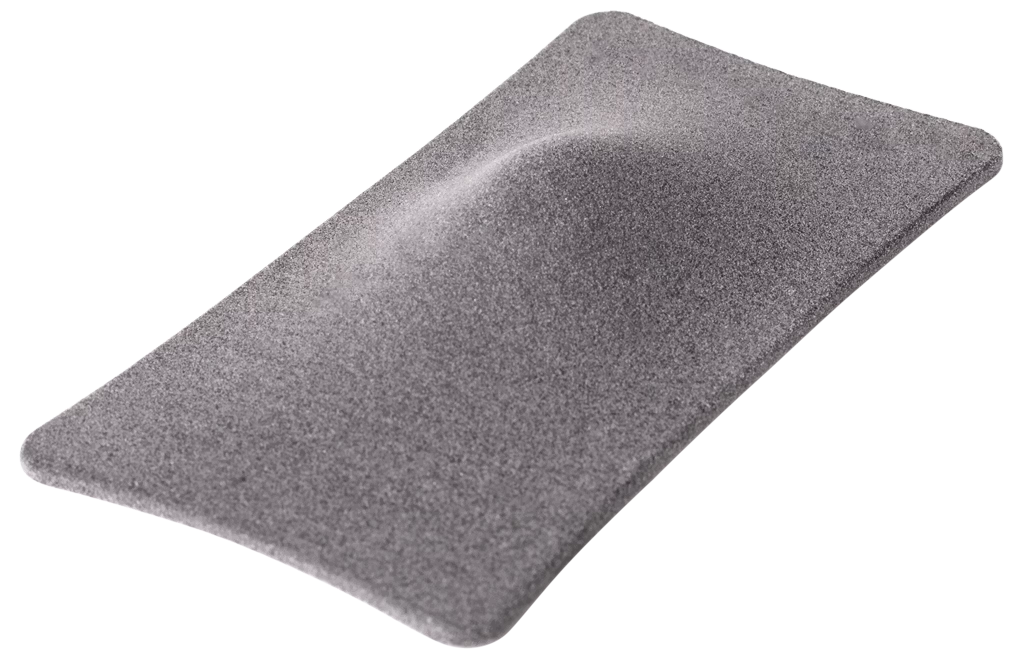
MJF PA 12
A mineral-filled polyamide designed for high stiffness and heat resistance. It provides excellent dimensional stability and a smooth finish, making it ideal for rigid functional parts and precision wind-tunnel models.

DMLS Aluminium AlSi10Mg
A race-proven, lightweight alloy for DMLS. It offers exceptional thermal conductivity and strength, making it ideal for high-performance structural and cooling components.
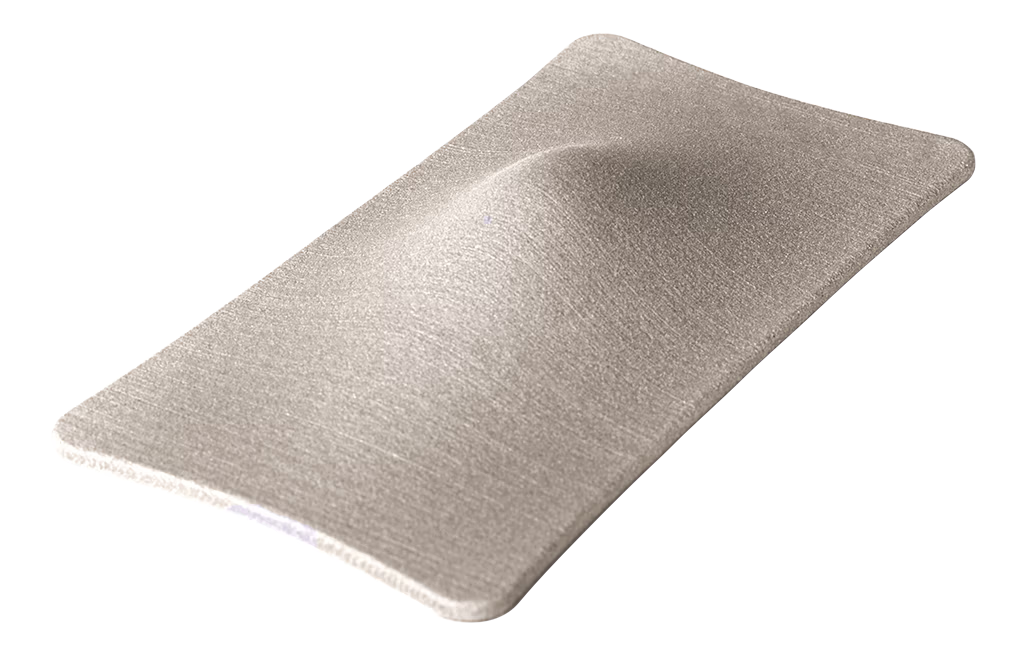
DMLS Titanium Ti6Al4v
An elite, high-strength alloy for DMLS. It offers an unparalleled strength-to-weight ratio and extreme heat resistance, making it the ultimate choice for high-stress components.
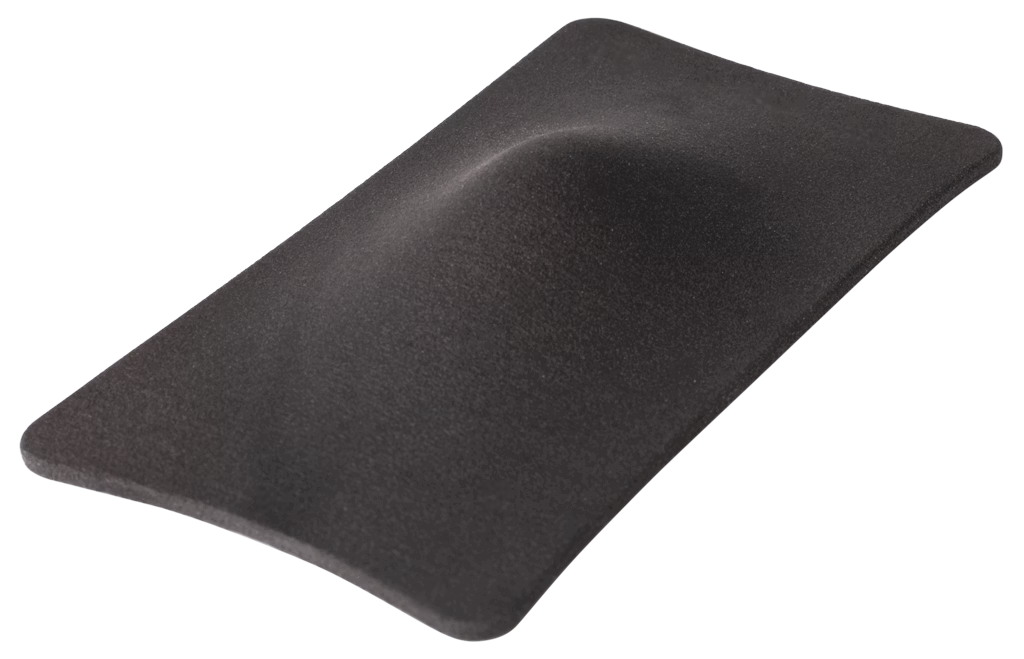
SLS PA 603-CF
A carbon-fiber reinforced polyamide built for extreme rigidity and lightweighting. It provides high strength-to-weight ratios and electrical conductivity, perfect for structural motorsport and aerospace applications.

SLS PA 640-GSL
A glass-sphere filled polyamide engineered for high stiffness and reduced density. It offers excellent dimensional stability and low weight, making it the top choice for lightweight structural parts and large-scale models.
Enabling the Next Generation of Drones Together


Manufacturing Services for Drones & UAVs


Bring Your Design to Life
"*" indicates required fields
By submitting this form, you agree to our Privacy Policy. We use the information you provide to respond to your inquiry and provide requested manufacturing services.

Quote Your Next Project
Looking for high-quality industrial 3D printing or injection molding solutions tailored to your needs? Our team is ready to provide a detailed quote for your project. Simply share your specifications, and we’ll deliver a clear, competitive estimate — no surprises, just precision and reliability.
Why choose us?
- Industrial 3D printing, injection molding and vacuum casting solutions for any scale and complexity
- Fast and accurate quoting process
- Local presence close to your business and business needs

FAQs
Do you have questions that needs answering? Here you can find the most common questions and answers.
While PA 12 and PA 2200 are the industrial standards for drone airframes due to their excellent balance of strength and ductility, certain mission profiles require specific mechanical enhancements. PA 603-CF (Carbon-Filled) acts as a high-stiffness extension for the airframe, providing the extra rigidity needed to minimize vibration in long-reach motor arms. Similarly, PA 640-GSL (Glass-Sphere Reinforced) is utilized when a project demands maximum dimensional stability and weight reduction in high-heat environments. We help you determine where standard PA 12 excels and where these specialized composites can provide a strategic performance boost.
Absolutely. Integrated snap-fits can be specifically designed to take advantage of the elongation and fatigue resistance of industrial polymers. By calculating the precise strain limits, you can ensure that battery hatches and payload pods can be engaged and disengaged hundreds of times in the field without losing tension. This eliminates the need for metal fasteners that can vibrate loose, reducing both the weight of the drone and the “tool-kit” requirement for ground crews.


