Orthotics & Prosthetics 3D Printing: The Digital Evolution of Human Mobility
Bridging Clinical Expertise and High-Volume Manufacturing
The O&P industry is undergoing a digital transformation. Traditional hand-lamination and plaster casting are being replaced by precise digital scans and additive production. At Prototal, we provide the specialised manufacturing framework that allows for the creation of fully customised, biocompatible orthotics and prosthetics without the geometric limitations of legacy methods.
ISO 9001 | ISO 14001
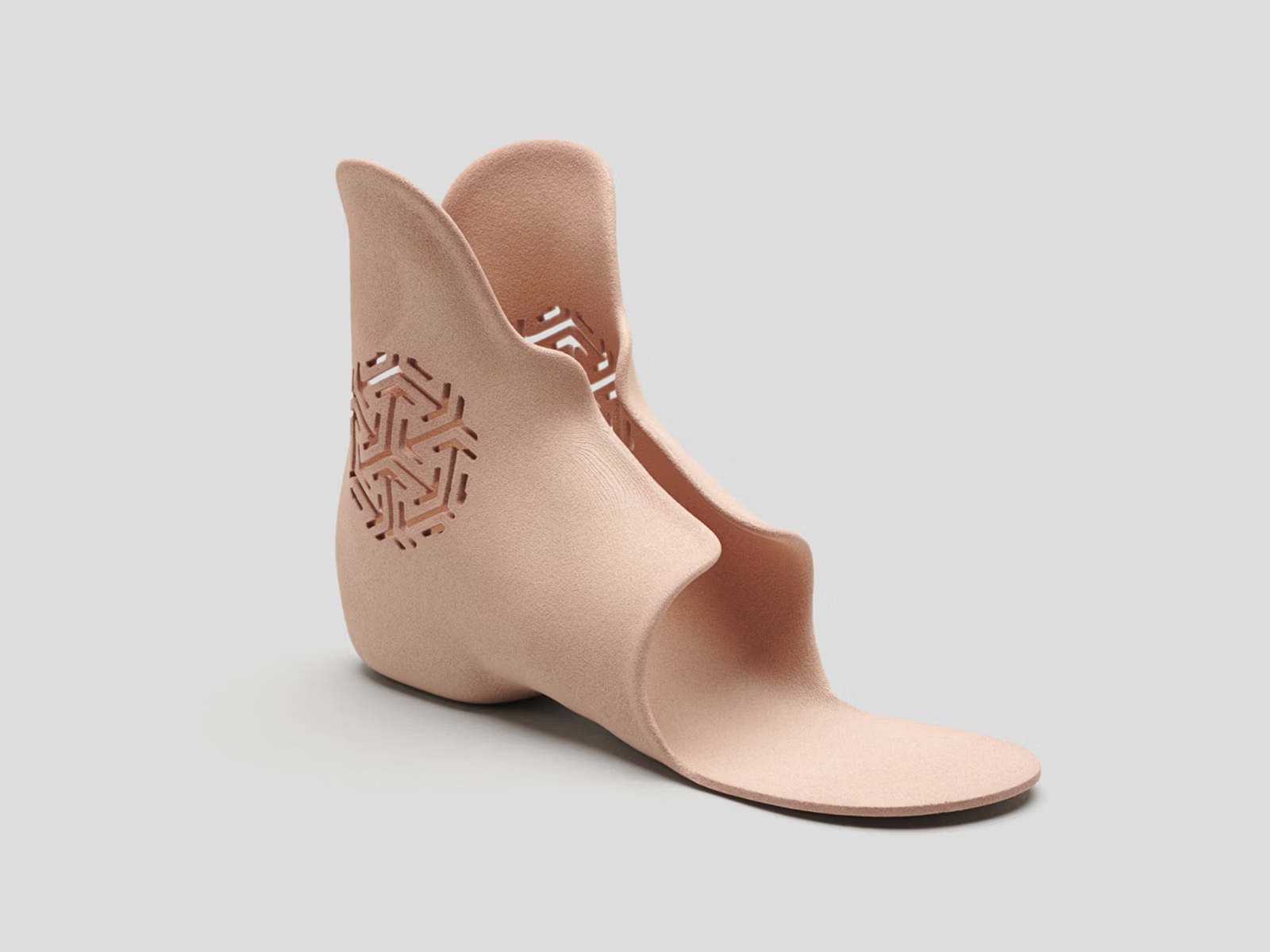
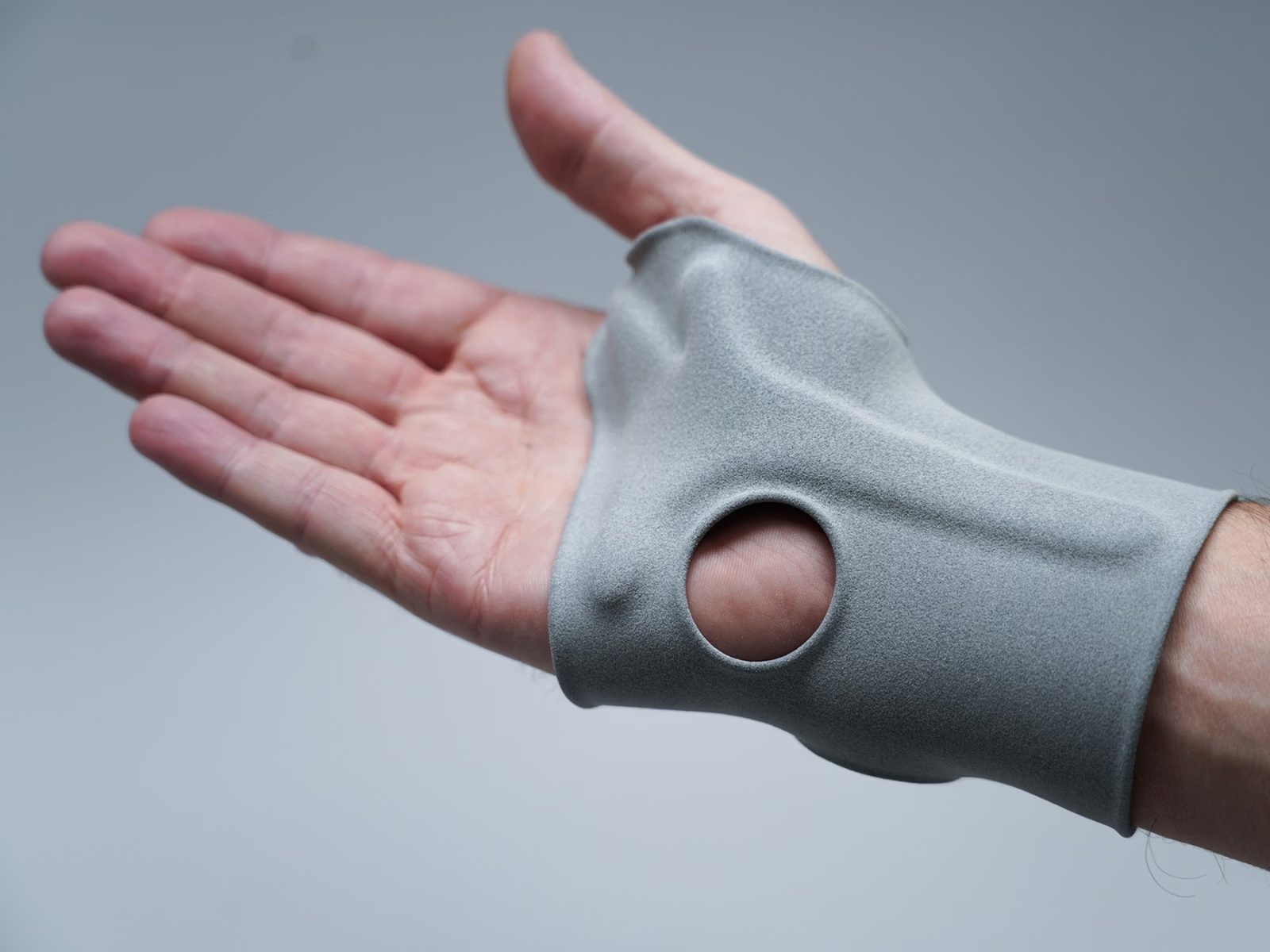
The O&P sector is at a major turning point, moving away from labor-intensive manual processes toward a streamlined, data-driven future.
We are proud to work alongside forerunners like Blatchford, whose commitment to innovation has been instrumental in enabling the digital workflow. By combining their clinical excellence with our industrial 3D printing and certified processes, we are transforming how personalised, high-performance prosthetic solutions reach the patient.
— Henrik Lundell, Executive Director for Global Strategic Business Development at Prototal Group

Why Choose Prototal for Orthotics & Prosthetics?
We operate as the manufacturing backbone for your digital workflow, combining elite technology partnerships with a deep understanding of patient-centric engineering.
Certified Skin-Contact Safety & Biocompatibility
Patient safety is the foundation of our O&P framework. We utilise polymers specifically selected for their skin-contact safety. Our core materials, including PA 12 and TPU, have undergone rigorous testing to meet international biocompatibility standards. These materials ensure that your designs result in devices that are lightweight, resilient, and safe for continuous skin contact throughout their lifecycle.
HP & EOS Certified Manufacturing Excellence
Manufacturing for the medical sector requires absolute process stability. As certified partners for both HP and EOS, Prototal operates a validated technology stack that guarantees repeatable mechanical properties across every build. We utilise HP MJF for high-speed, isotropic O&P components with fine detail, while our EOS SLS fleet provides the industry standard for high-strength structural elements like PA 2200.
Personalised Geometry & Functional Integration
Digital design allows for the variation of structural properties, such as stiffness and flexibility, within a single, monolithic component. Using PA 2200, your CAD data can be realised as high-strength structures for lower-limb sockets. For applications requiring shock absorption, our TPU allows for the production of flexible liners. By utilising the geometric freedom of additive manufacturing, you can incorporate breathable lattice structures directly into your models to improve skin health and patient compliance.
Scaling to 100,000 Units: From Prototype to Global Market
While we are built for precision in custom devices, our infrastructure is designed for massive throughput. We support serial 3D printing runs of up to 100,000 units. This allows manufacturers to take their CAD files and launch standardised O&P product lines without the high cost of traditional tooling. This “tool-less” scaling allows you to iterate designs based on clinical feedback and scale seamlessly as your market grows.
Enhanced Hygiene with Vapour Smoothing
Daily-wear devices are subjected to constant friction, sweat, and bacteria. We utilise Vapour Smoothing to seal the surface of 3D printed polymers like PA 2200. This creates a smooth, non-porous finish that is easy to sanitise and significantly more comfortable against the skin. This process also improves the material’s fatigue resistance, ensuring the device survives the thousands of gait cycles required by an active lifestyle.
Digital Prosthetics Manufacturing with Industrial 3D Printing
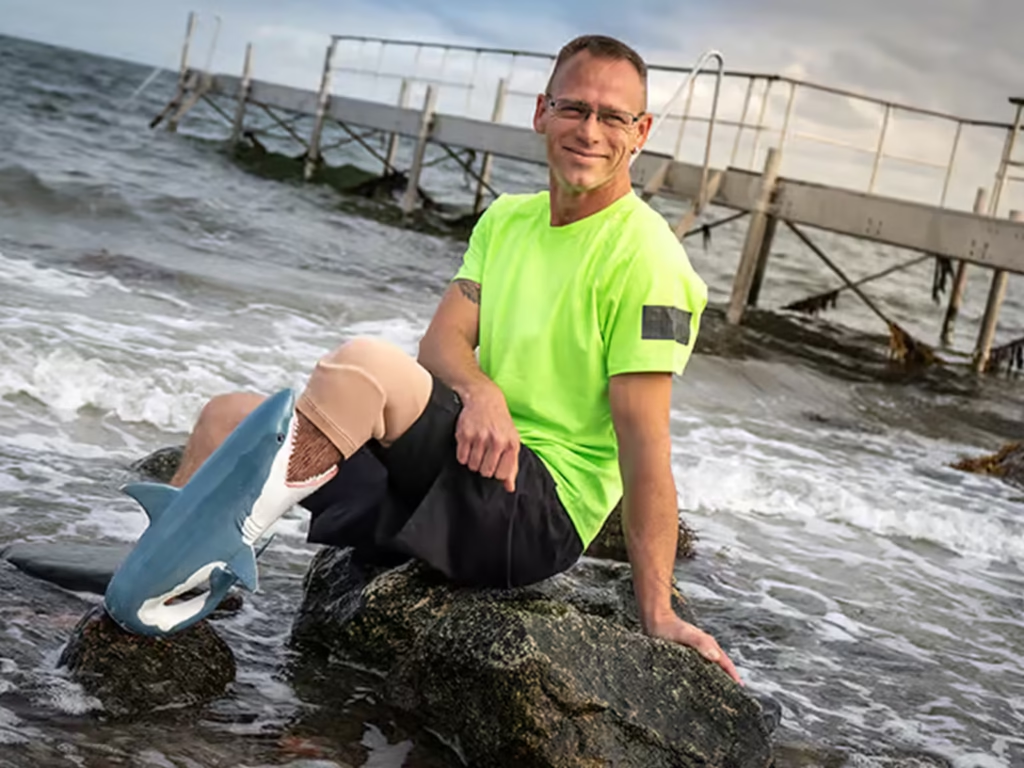
For decades, Sahva has developed and manufactured highly customised prosthetic and orthotic solutions, helping patients regain mobility and improve quality of life. Producing approximately 1,000 prostheses annually, Sahva operates in a field where no two products are alike and traditional mass production is impossible.
To accelerate production while maintaining the highest standards of comfort and precision, Sahva partnered with Prototal to integrate Industrial 3D Printing into its digital workflow.
A Partnership Defined by Clinical Precision
Prototal operates as a strategic extension of your clinic or manufacturing facility, providing the industrial continuity required for both patient-specific urgent care and long-term device innovation. We bridge the gap between clinical expertise and high-volume production, leveraging a deep understanding of the performance standards and patient safety requirements mandated by the O&P industry.

Quote Your Next Project
Looking for high-quality industrial 3D printing or injection moulding solutions tailored to your needs? Our team is ready to provide a detailed quote for your project. Simply share your specifications, and we’ll deliver a clear, competitive estimate — no surprises, just precision and reliability.
Why choose us?
- Industrial 3D printing, injection moulding and vacuum casting solutions for any scale and complexity
- Fast and accurate quoting process
- Local presence close to your business and business needs
Bring Your Design to Life
"*" indicates required fields
By submitting this form, you agree to our Privacy Policy. We use the information you provide to respond to your inquiry and provide requested manufacturing services.

FAQs
Whether you are navigating the transition from prototyping to serial production or optimising an existing supply chain, we are here to provide the technical clarity you need. If your specific challenge isn’t covered here, our application engineers are ready to discuss your project’s unique requirements and help you find the most efficient path to production.
We act as the industrial backend for your clinical expertise. Once a patient is scanned and the CAD model is finalised, the data is sent to our production hubs. This allows your clinic to focus on the patient while we handle the high-precision fabrication.
Absolutely. We offer a versatile material portfolio to match specific clinical needs. For structural, high-load components like lower-limb sockets or braces, we utilise PA 12 and PA 11—polymers known for their high strength-to-weight ratio and long-term durability under dynamic loads. For applications requiring high flexibility, energy return, or soft-touch interfaces, we also produce parts in TPU. This allows us to manufacture everything from rigid, supportive frames to soft, shock-absorbing liners within the same digital ecosystem.
Yes. Safety and biocompatibility are paramount in the O&P sector. Our core materials have undergone rigorous testing and meet international standards for biocompatibility (including skin sensitisation, irritation, and cytotoxicity). When combined with our Vapor Smoothing post-processing, which creates a sealed, non-porous surface, these materials become even more hygienic and skin-friendly, preventing the bacterial buildup often associated with traditional porous surfaces.


