
End-to-end Molded Fiber Packaging Solutions: From Tooling to Production
Packaging is no longer a separate phase of the supply chain — it is a vertically integrated process.
At Prototal, we provide the full infrastructure required to move from initial packaging design to the final packaging product. By managing both a radical new way of producing tools with HP Industrial 3D Printing combined with our own molded pulp packaging lab in Malmö, we eliminate any friction in your supply chain. Our sustaintable packaging solutions are engineered to replace plastic at industrial scale and help brands across the packaging industry transition to fiber-based alternatives.
A Complete Lifecycle Solution From Concept to Scale
Our end-to-end infrastructure is built on a “Concept to Scale” model that allows us to refine every variable of the production cycle under one roof. By managing the technical nuances in-house, we turn manufacturing complexity into a measurable competitive advantage for our partners.
Material & Recipe Optimisation
We don’t just use standard materials; we optimize the “recipe” for your specific application – including blends based on recycled paper, recycled materials, and other natural fibers. By refining factors like forming, dewatering, and cycle times, we directly decrease lead times and maximize production line productivity, delivering molded pulp products tailored to each customer’s performance requirements.
Advanced Perforation & Geometry Control
Through high-resolution MJF technology, we achieve precise perforation optimisation. This allows for zone-based grammage control and significant weight reduction in final parts. The result is improved mechanical properties and a reduction in both variable costs and material waste.
Utility & Dryness Efficiency
Our process includes dryness optimization to reduce utility consumption. By precisely controlling the moisture-removal phases of production, we achieve significant energy and water savings, making the industrial transition to molded fiber more sustainable and cost-effective. For applications requiring extra strenght and surface quality, we also support dry molded fiber technology as an alternative to conventional wet-forming – broadening the range of molded fiber products we can deliver at scale.
Accelerated Sample Production
The proximity of our digital tooling to our production lines allows us to shorten the time to prototype down to just 2–3 weeks. This rapid turnaround enables more iterations and ensures a faster, lower-risk introduction of new products to the market.
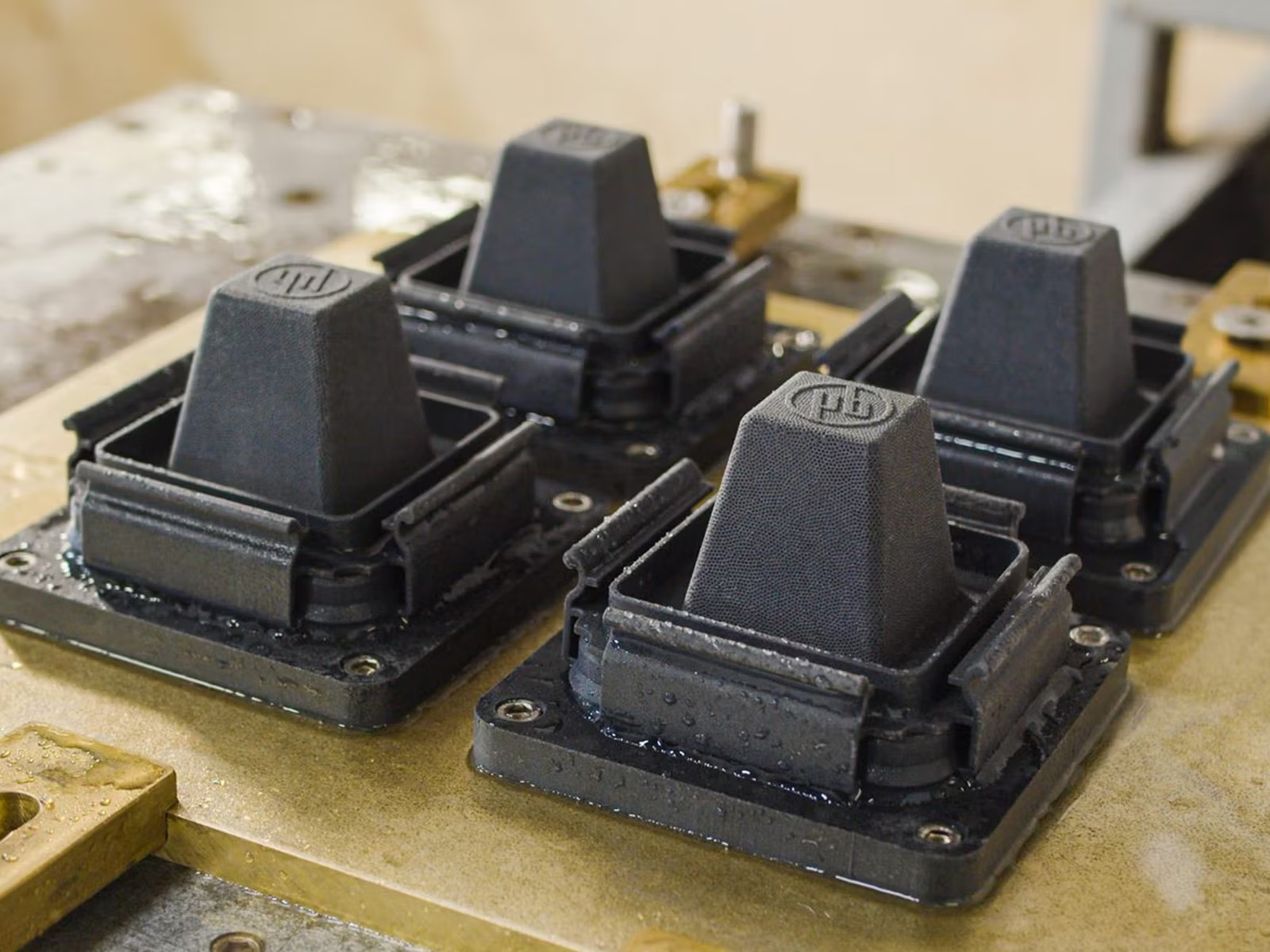
Enabled by HP Multi Jet Fusion
Our infrastructure leverages proprietary HP technology with special calibrated Multi Jet Fusion (MJF) 3D Printing machines. Tools are produced with biobased PA 11 — a polymer derived from castor oil.
Our calibrated 3D printing machines delivers exceptional resolution, capable of producing complex meshes and ventilation patterns with hole diameters as small as 0.4mm. This precision ensures optimal flow and filtration, reducing fiber and water consumption and providing a technical advantage compared to traditional tooling for pulp packaging.
Why consider Moulded Fibre with Digital Tooling?
| Variables | Digital Tooling with 3D Printing | Traditional Tooling |
|---|---|---|
| Lead Time | 2-3 weeks | 5-8 weeks |
| Geometries | Complex | Limited |
| Screen | Digital Workflow | Manual Labour |
| Optimisation | Digital Topology Optimisation | Limited |
| Rapid Iterations | Yes | No |
Lead times may be influenced by the recipe of moulded pulp, complexity of digital tooling, perforation patterns, and specific dewatering requirements.
An Integrated Tooling Architecture

This is not just a tool; it is the infrastructure for a circular economy.
In the global shift toward sustainability, the packaging is no longer just a container — it is a brand’s commitment to the future.
By removing the traditional barriers of long lead times and geometric constraints, we enable our partners to transition from plastic to fiber at an industrial scale, turning sustainability from a corporate challenge into a competitive advantage.
— Henrik Lundell, Global Sales Director at Prototal Group

Custom Molded Fiber Packaging Engineered for Visionaries
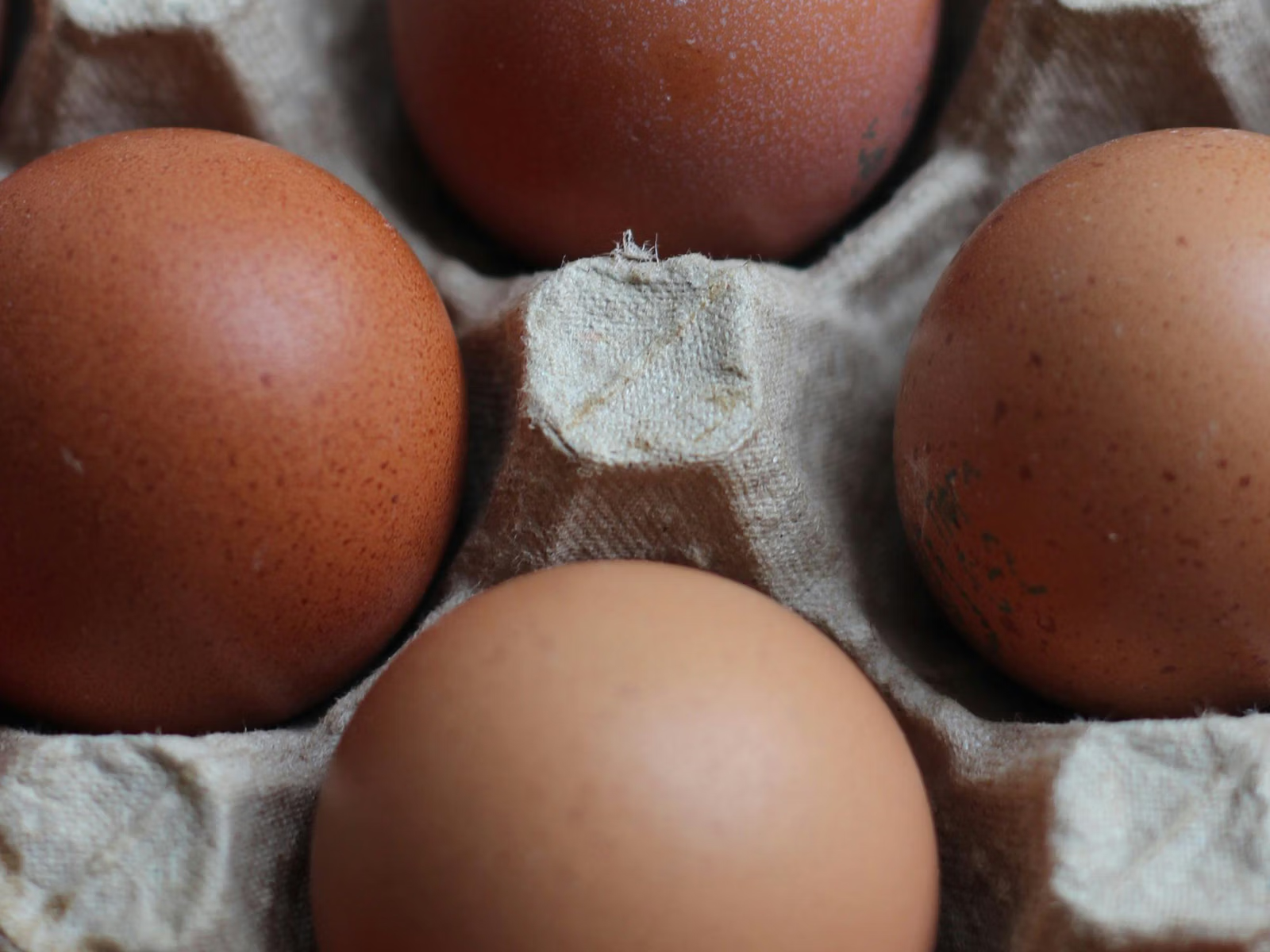
High-Volume Food Commodities
In the fast-moving food commodity sector, efficiency and reliability are paramount. We provide the industrial-scale infrastructure necessary for the high-volume production of essential items like egg cartons, molded pulp trays, and durable cup carriers.
By optimising recipes and tooling for these specific products, we help producers decrease lead times and increase overall productivity without sacrificing the structural integrity required for high-speed logistics.

Next-Generation Food & Beverage Packaging
The “New Food” market demands packaging that acts as a premium brand ambassador while meeting strict sustainability goals. We enable the production of complex, high-precision biodegradable packaging items such as lids, cups, food trays, and coffee capsules – a clear example of how sustainable packaging can also serve as a premium consumer experience.
Using our digital tooling and MJF perforation optimisation, we achieve the tight tolerances and sophisticated geometries required for these consumer-facing products, turning sustainability into a measurable competitive advantage.
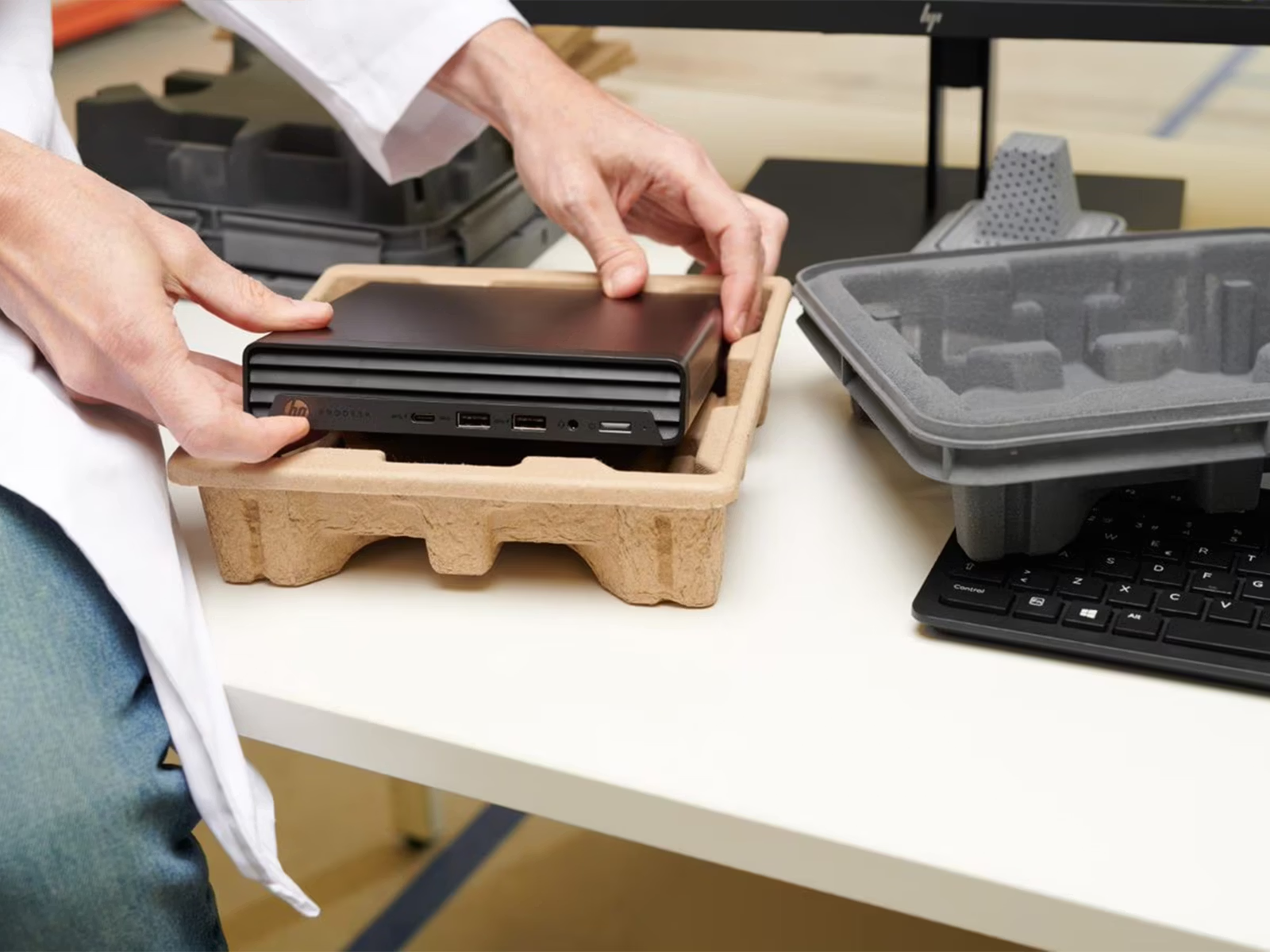
Industrial & Technical Packaging
For the industrial and cosmetic sectors, packaging must provide maximum protection with minimal environmental impact. Our solution enables the creation of custom protective packaging, interior packaging inserts for sensitive components, and high-end cosmetic inserts that offer superior shock absorption and aesthetic finish.
By utilising zone-based grammage control and advanced MJF meshes, we reduce part weight and variable costs while ensuring that sensitive electronics or luxury goods remain perfectly secure during transit.
Pulp Recipe Engineering: The Scientific Foundation of Fibre Performance
The success of a molded fibre solution starts with the molecular integrity of the pulp. At our dedicated Moulded Fibre Lab in Malmö, we treat fibre composition as a precision-engineered variable, optimising the blend to meet specific mechanical and aesthetic requirements.
By calibrating the fibre-to-water ratio and additives, we achieve superior recipe optimisation that directly enhances forming efficiency and dewatering speed.
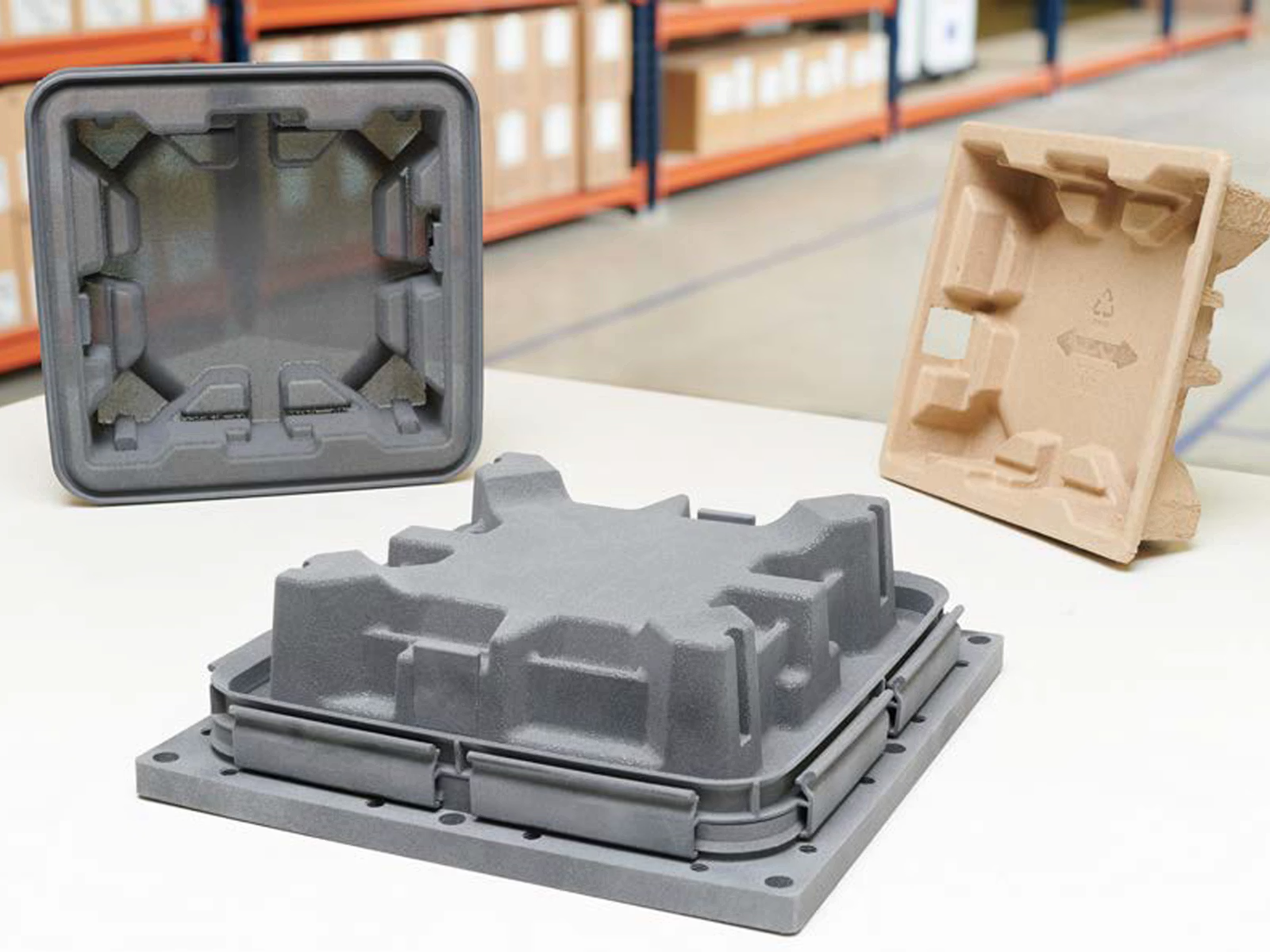
Your end-to-end packaging partner
From high-precision digital tooling to industrial-scale material production, Prototal provides the integrated infrastructure for the circular economy. We bridge the gap between concept and delivery, enabling a seamless transition from plastic to fibre with unmatched speed and geometric freedom.

The Moulded Fibre Project Audit
Transitioning from traditional mesh to high-performance digital tooling requires a precise alignment of geometry and material science. Download our technical questionnaire to provide our experts with the critical parameters of your project.
Bring Your Packaging Design to Life
"*" indicates required fields
By submitting this form, you agree to our Privacy Policy. We use the information you provide to respond to your inquiry and provide requested manufacturing services.

FAQs
Do you have questions that needs answering? Here you can find the most common questions and answers.
We provide a vertically integrated infrastructure where we manage both the high-precision digital tooling and the final material production in-house. This eliminates the traditional friction between toolmaker and producer, ensuring that the design intent is perfectly reflected in the final part while significantly reducing lead times.
Our Moulded Fibre Lab in Malmö serves as the unified heart of our fibre operations, housing our entire end-to-end infrastructure under one roof. Here, we combine advanced material science with industrial-scale additive manufacturing. We conduct exhaustive recipe optimisation, calibrating fibre blends and additives to meet precise requirements for moisture resistance and structural integrity.
By housing our HP MJF 3D printing fleet directly alongside our fibre laboratory, we bridge the gap between digital tooling and physical production. This proximity allows our engineers to test 0.4mm perforation patterns against custom pulp recipes in real-time, ensuring that every batch is perfectly optimised for dewatering speed and dimensional accuracy before it reaches the production floor.
By utilising digital tooling, we can often shorten the time to prototype down to just 2–3 weeks. Final production lead times depend on part geometry, build volume, and the complexity of the pulp recipe developed at our lab.


