PolyJet 3D Printing Service: Multi-Material Precision and High-Fidelity Realism
PolyJet technology stands alone in its ability to print multiple materials simultaneously, making it possible to produce parts that combine rigid, flexible, and transparent properties within a single monolithic component. As a manufacturing process, PolyJet is particularly well suited for complex geometries and intricate details that would be difficult – or outright impossible – to achieve with conventional methods.
At Prototal, we leverage PolyJet to deliver high-resolution multi materials prototypes that look, feel, and function like finished consumer products. Whether you need overmolded grips, living hinges, or simulated multi-shot injection molded parts, PolyJet delivers unmatched aesthetic and tactile accuracy without the need for assembly – backed by strict quality assurance at every stage of the build.
Powered by

| Merkmal | Prototal PolyJet-Fähigkeit | Vorteil |
|---|---|---|
| Maximales Bauvolumen | 490 x 390 x 200 mm | Effiziente Produktion von Baugruppen aus mehreren Materialien |
| Material-Typen | Steif, gummiartig, durchsichtig | Simulieren Sie Multi-Shot-Spritzguss |
| Genauigkeit | Toleranz bei 0,2 mm | Perfekt für komplizierte kosmetische Details |
| Shore A Bereich | Von 27A (weich) bis 95A (starr) | Testen Sie verschiedene Haptiken an einem Teil |
| Oberflächenbehandlung | Glatt, hochglänzend oder matt | Professionelle und realistische Verarbeitung |
Multi-Material-Innovation
PolyJet bridges the gap between concept and functional realism by allowing for a diverse range of material properties in one build. By jetting layers of liquid photopolymer that are instantly cured by UV light – with a layer thickness as fine as 16 microns – we achieve a smooth surface finish that closely mimics multi-shot injection molding.
The portfolio of different polyjet materials spans rigid resins, rubber-like compounds from 27A to 95A Shore hardness, and optically clear photopolymers, giving designers and engineers an unusually wide creative envelope in a single print.
Industries benefiting from PolyJet include:
- Elektronik: Prototypen mit integrierten Tasten und Soft-Touch-Griff
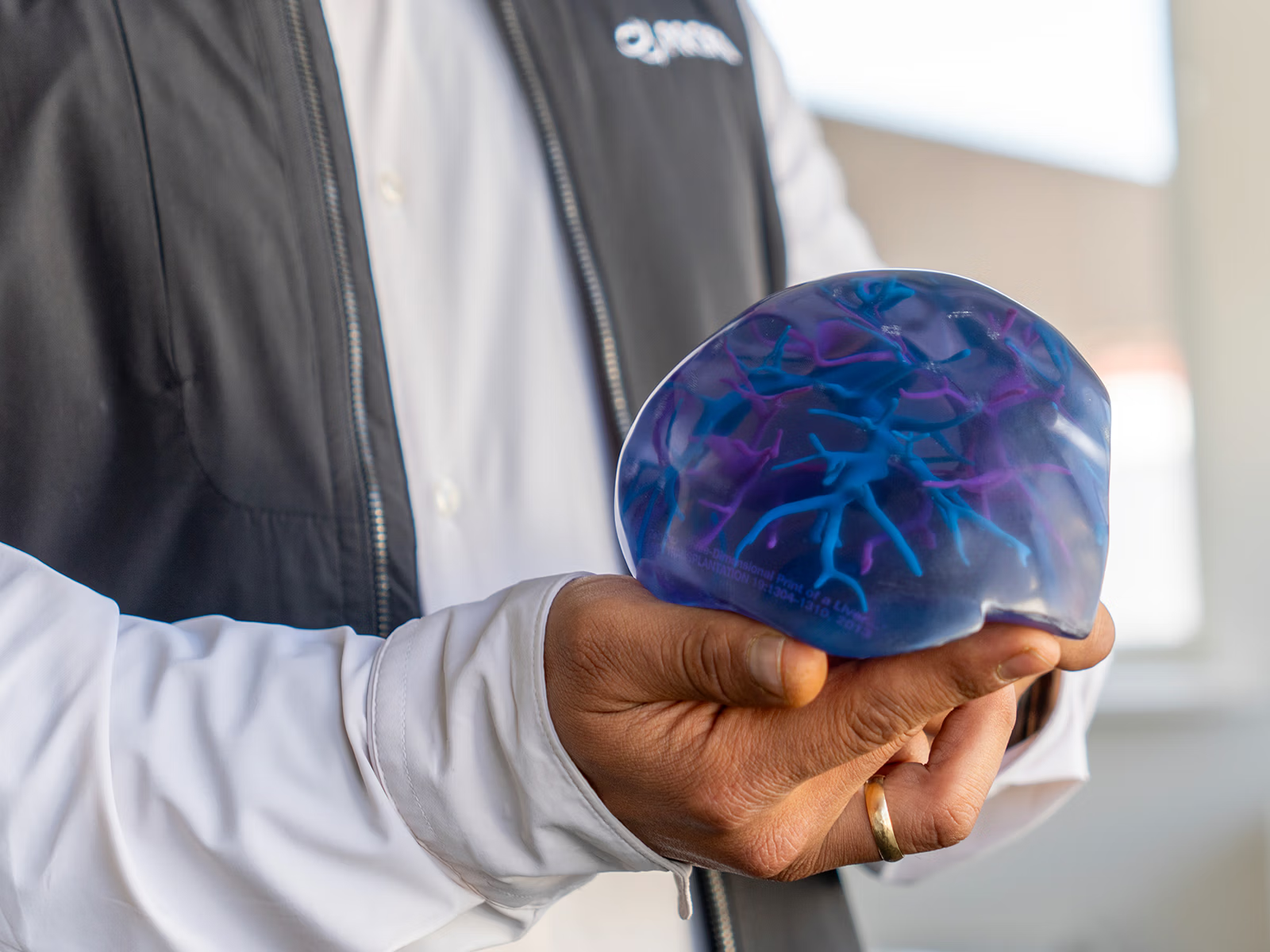
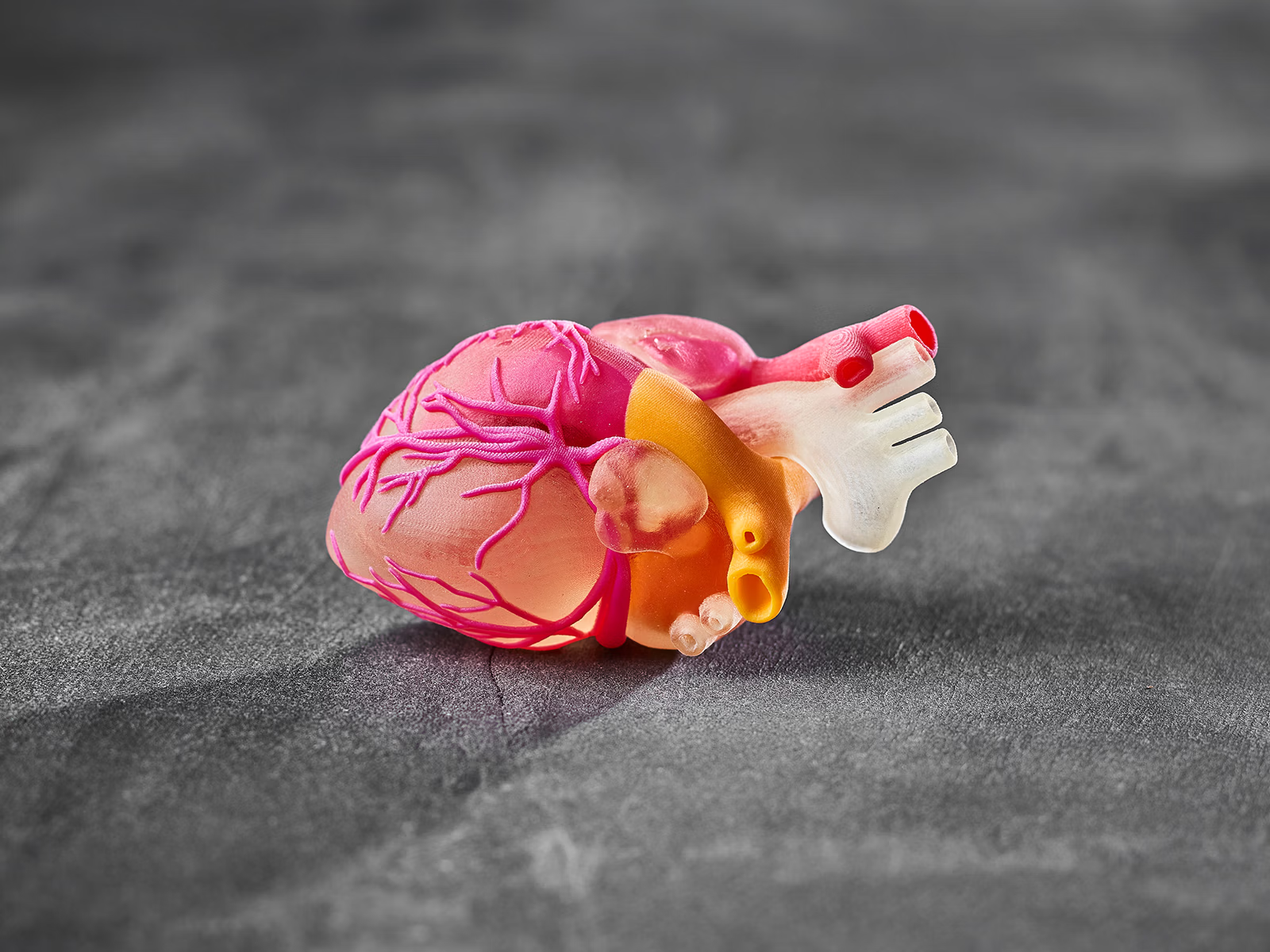
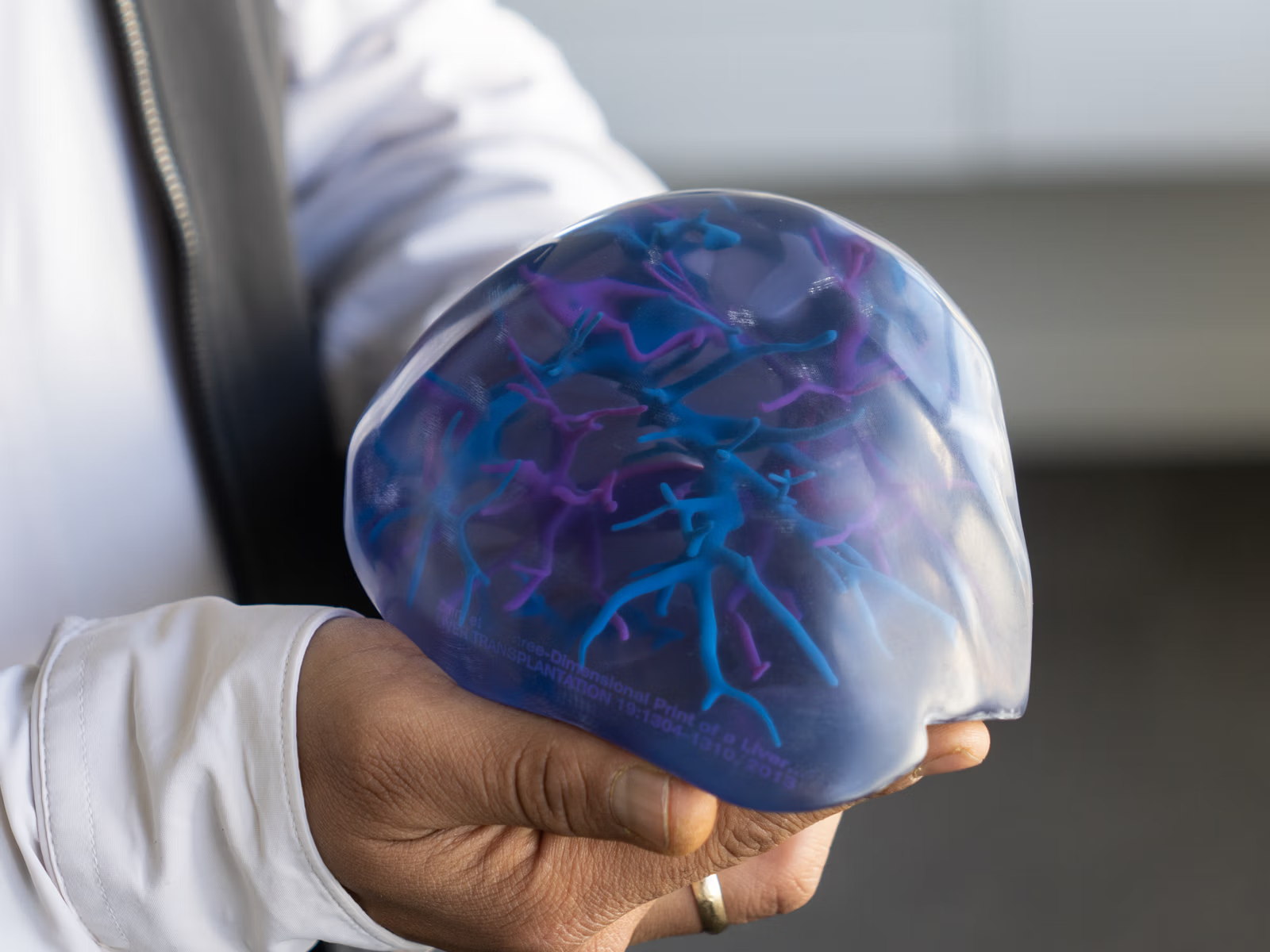
- Medical and dental applications: Anatomical models, surgical guides, and dental study models with varying tissue densities for planning and education
- Produktdesign: Realistische Look-and-Feel-Modelle für ergonomische und taktile Tests
- Industrietechnik: Komplexe Dichtungen und Verbindungen mit unterschiedlicher Shore A-Härte
Komplexe Geometrien ermöglichen
Our PolyJet systems offer a versatile build volume of up to 490 x 390 x 200 mm. This capacity allows us to produce parts in high-detail batches on a single tray, or build multi materials parts as one monolithic unit – eliminating assembly steps and significantly reducing lead times compared to traditional overmolding workflows.
Digitale Materialien & Leistung
PolyJet is unique in its ability to create “Digital Materials” by blending primary resins on the fly. This gives precise control over color, transparency, and flexibility, and is what makes the technology so effective at capturing intricate details in cosmetic prototypes, stakeholder review models, and market-validation samples.
Optische Klarheit & taktile Präzision
Our transparent materials provide excellent clarity for light pipes and screens, while our rubber-like resins span a wide Shore A range from soft to nearly rigid. Combined with a fine layer thickness, this versatility enables us to simulate everything from soft silicone to rigid thermoplastics within one part – ensuring your prototype feels as real as it looks.
Fortschritte in der pädiatrischen Herzchirurgie
In collaboration with a leading Danish hospital, we use PolyJet for one of the most demanding medical and dental applications: patient-specific 3D models of children’s hearts. By simulating various tissue densities, we provide surgeons with a 1:1 replica to rehearse intricate procedures. To support these life-saving surgeries, our workflow – including dedicated quality assurance checks – has been optimized to deliver models within 24 hours of receiving the scan data.
3D Druck Gestaltungsrichtlinien
Unsere Leitfäden sind darauf ausgelegt, Sie bereits vor der Einreichung Ihres Designs bestmöglich zu unterstützen. Unser Ziel ist es stets, das optimale Ergebnis für Ihr Projekt zu erzielen. Wenn Sie unsere Richtlinien berücksichtigen, können Sie sicher sein, dass Ihr Design die bestmögliche Qualität erreicht.
Kontaktieren Sie uns, wenn Sie Hilfe benötigen, wir helfen Ihnen gerne weiter!
Wie PolyJet einen Multi-Material-Realismus erreicht
Das PolyJet-Verfahren ist eine hochauflösende additive Fertigungsmethode, die ähnlich wie ein Tintenstrahldrucker funktioniert. Dabei werden Tausende von winzigen Tröpfchen eines Photopolymerharzes ausgestoßen, die sofort durch ultraviolettes (UV-) Licht gehärtet werden.
Der Schritt-für-Schritt-Prozess in PolyJet
- Digitales Material Blending: Ihre CAD-Daten werden analysiert, um verschiedenen Bereichen des Teils bestimmte Eigenschaften wie Farbe, Transparenz oder Flexibilität zuzuweisen. Auf diese Weise können wir “Digitale Materialien” erstellen, die das Umspritzen in einem einzigen Arbeitsgang simulieren.
- Ultrafeine Schichtabscheidung: Der Druckkopf spritzt mikroskopisch kleine Schichten von flüssigem Photopolymer auf die Bauplatte. Durch die Verwendung von Schichten, die nur 16 bis 30 Mikrometer dünn sind, werden komplizierte Strukturen erfasst und eine Oberfläche mit nahezu unsichtbaren Schichtlinien erzielt.
- Gleichzeitige UV-Härtung: Die am Druckkopf angebrachten UV-Lampen härten jeden Harztropfen sofort aus, wenn er aufgetragen wird. Diese sofortige Aushärtung gewährleistet eine hohe Maßgenauigkeit und ermöglicht die Herstellung komplexer Baugruppen aus mehreren Materialien ohne Verzug.
- Entfernen der Gel-Stütze: Zum Schutz von Überhängen und internen Geometrien wird ein spezielles gelartiges Stützmaterial neben das Teil gedruckt. Nach dem Druck wird dieses Material mit einem Wasserstrahl oder einem chemischen Bad effizient entfernt, so dass die ursprüngliche Oberfläche intakt und glatt bleibt.
- High-Fidelity Finishing: Nach der Reinigung sind die Teile bereit für den sofortigen Einsatz oder für eine hochwertige Nachbearbeitung. Bei durchsichtigen Materialien wie VeroClear beinhaltet dies eine professionelle Politur, um optische Transparenz zu erreichen.
Verwirklichen Sie Ihr Design
"*" indicates required fields
Mit dem Absenden dieses Formulars erklären Sie sich mit unserer Datenschutzerklärung einverstanden. Wir verwenden die von Ihnen bereitgestellten Informationen ausschließlich, um auf Ihre Anfrage zu antworten und die gewünschten Fertigungsservices bereitzustellen.
Fordern Sie ein Angebot für Ihr nächstes Projekt an
Sie suchen hochwertige industrielle 3D Drucklösungen, die auf Ihre Bedürfnisse zugeschnitten sind? Unser Team erstellt Ihnen gerne ein detailliertes Angebot für Ihr Projekt. Teilen Sie uns einfach Ihre Spezifikationen mit und wir liefern Ihnen einen klaren, wettbewerbsfähigen Kostenvoranschlag – ohne negative Überraschungen, mit Präzision und Zuverlässigkeit.
Warum sollten Sie Prototal wählen?
- 3D Drucklösungen für jede Größe und Komplexität
- Schneller und präziser Angebotsprozess
- Lokale Präsenz in unmittelbarer Nähe Ihres Unternehmens – perfekt abgestimmt auf Ihre geschäftlichen Anforderungen

FAQs
Haben Sie Fragen zum industriellen 3D Druck mit PolyJet? Hier finden Sie die häufigsten Fragen und Antworten zu diesem Thema.
Ja. Die größte Stärke von PolyJet ist das gleichzeitige Ausstoßen mehrerer Harze, wodurch Teile mit unterschiedlichen Farben, Transparenzen und Flexibilitäten (Shore A) in einem einzigen Druckvorgang möglich sind.
Ja. Wie in unserer Zusammenarbeit mit lokalen Krankenhäusern für pädiatrische Herzmodelle zu sehen ist, kann PolyJet verschiedene Gewebedichten simulieren, was es für die chirurgische Planung und Ausbildung unverzichtbar macht.
Unsere Systeme verfügen über ein Bauvolumen von 490 x 390 x 200 mm und ermöglichen so die Herstellung komplexer Baugruppen aus mehreren Materialien in einem einzigen Bauvorgang.
Mit einer Schichtdicke von nur 0,16 mm bietet PolyJet eine der glattesten Oberflächen im 3D-Druck. Schichtlinien sind praktisch unsichtbar und imitieren die Qualität des Spritzgusses. Während wir harte, starre Oberflächen professionell polieren können, um eine hohe Transparenz oder ein glänzendes Finish zu erzielen, beachten Sie bitte, dass weiche, gummiartige Elemente aufgrund der Beschaffenheit des Materials nicht poliert werden können.
Wir bieten eine Reihe von Nachbearbeitungen Dienstleistungen an, um sicherzustellen, dass Ihre 3D gedruckten Teile den höchsten Anforderungen an Qualität, Präzision und Ästhetik genügen.
- Stütze entfernen & Schleifen
- Gewinde- und gewindelose Einsätze
Fertigung ist für uns mehr als ein Geschäft – sie ist eine Partnerschaft. Bei Prototal erhalten Sie eine feste Ansprechperson in Ihrer Nähe, die Ihr Unternehmen und Ihre Anforderungen genau kennt und Sie durch den gesamten Prozess begleitet. So starten wir die Zusammenarbeit: Wenden Sie sich an das Team in Ihrer Region (siehe Kontakt) oder schreiben Sie uns eine E‑Mail. Wir melden uns umgehend bei Ihnen.
- Norwegen: post@prototal.no oder +47 74 09 06 00
- Schweden: 3dp@prototal.se oder +46 (0) 36-38 72 00
- Dänemark: 3dp@prototal.dk oder +45 43 99 37 36
- Vereinigtes Königreich: info@prototaluk.com oder +44 01635 635855
- Italien: info@prosilas.com oder +39 0733 892665
- Österreich, Deutschland & Schweiz: 3dp@prototal.at oder +43 5572 52946-9
Als flexibler Partner können wir Vorlaufzeiten ab 1 Arbeitstag anbieten, abhängig von der Auswahl der Nachbearbeitung und der Qualitätskontrolle. In der Regel können Sie mit einer Vorlaufzeit im Bereich von 2-3 Werktagen rechnen, abhängig von den oben genannten Variablen.
*Prototal bietet branchenführende Durchlaufzeiten. Trotzdem sind alle Lieferpläne Schätzungen, die auf standardmäßigen Betriebsbedingungen basieren. Die endgültigen Lieferzeiten hängen von der lokalen Verfügbarkeit, der Bauteilgeometrie, dem Bauvolumen und der spezifischen Materialauswahl ab. Komplexe Geometrien, die umfangreiche Stützstrukturen oder Hochleistungsmaterialien erfordern, können zusätzliche Bearbeitungszeit benötigen, um strukturelle Integrität und Maßgenauigkeit zu gewährleisten.


